g

SmakÅs is an annual food and technology festival, organized in collaboration between Vitenparken and Ås municipality (2018 – pdd)

The Science Park's costumed science hosts will be participating in the center of Ås with our own installation, Brøleparten, developed with support from Infinitum. The installation focuses on circularity and pledges.

Vitenparken Campus Ås collaborates annually with Ås municipality on SmakÅs , a two-day food and technology festival. The Science Center is responsible for the free Family Day on Sundays, while Ås municipality coordinates the market day on Saturday.

SmakÅs is Norway's only food and technology festival with sustainable development as its main focus. Every autumn we invite young and old from Ås and the surrounding area to the festival at Campus Ås and in the city center. Previously, SmakÅs was a one-day festival divided between Ås city center and Vitenparken ; in 2022 we expanded to more days, with market day on Saturday and Family Day on Vitenparken Sunday. Since 2023, Vitenparken had the main responsibility for the festival's marketing and graphic profile.

As a science center for food and sustainable development, we contribute with a comprehensive outreach program for children and families.

In the school and kitchen garden , VitenEnga, our facilitators – under the main responsibility of Håkon Mella , educator and school garden facilitator – lead practical activities that connect growing, cooking and sustainability. The goal is to use the school garden as an interdisciplinary classroom where children and adults learn about the connection between ecosystems, how food is produced and what food security means – and why this must be protected for future generations.

We also arrange academic events about the history of science and research at Campus Ås, with historical tours and lectures – including about the history of Jarlsberg cheese, developed at NMBU and Norway's most internationally known cheese – as well as current lectures on food and food safety from leading academic circles. Our guides, many with research backgrounds and local roots in Ås and NMBU, take groups through Norway's most beautiful campus, while science hosts lead visitors to Korsmo's weed garden in collaboration with NIBIO to share knowledge about useful plants and "weeds".

Vitenparken houses NOBA – Norwegian BioArt Arena , Norway's first and only arena for bioart. During SmakÅs we have shown films, exhibitions and children's activities that promote the art form and stimulate children's creativity – to awaken new perspectives on nature, the environment and society.

Professor Roger Abrahamsen gives a lecture about Jarlsberg cheese at Family Day 2024

In our MatLab, we explore cooking from both sustainable and technological perspectives. Children can use a pancake robot to design and cook pancakes, and they can make their own salt. Our science hosts make nitrogen ice cream – a crowd favorite while also explaining the chemistry behind it.

The stations offer activities that both taste and explain, such as "make your own slush", used to illustrate physical principles (melting/cold) and link this to climate.

As a science center known for edible insects, we have a station where children and adults can taste – and learn about the climate and nutritional benefits. We also introduce plant-based protein snacks as the food of the future, to teach about sustainable consumption and what the diet of the future could look like.

Our presenter Frederic Lindboe engages the audience with science shows that combine humor, energy and learning for both children and adults. In addition, we offer a wide range of coding activities, from Bit:Bot to Sphero, and interactive installations developed in-house through our subsidiary Inspire to Action – most famously the Roaring Panther.

In 2024, nearly 5,000 people visited the festival in Ås over two days. This is probably the biggest and most important event for children in Ås this year. We are proud to offer this free of charge to residents and visitors. The Family Day alone attracts around 2,000 visitors.

Would you like to sponsor Family Day?

Contribute to stronger communication about food and sustainability, and to offer cultural and educational experiences for children and families – regardless of socio-economic background. Contact us at elina@vitenparken.no or marked@vitenparken.no.

Responsible at Vitenparken :


Elina Gobeti
Marketing and Communications Manager
elina@vitenparken.no

Graphic design:
– Raquel Marques
raquel@vitenparken.no
Jordsans – The Science Park's first industrial PhD by Elise Matilde Malik (2023–2026)

The doctoral project Jordsans is the Science Park's first industrial PhD (2023-2026). The project will involve employees at Vitenparken , Elise Matilde Malik, explore different ways of conveying topsoil through Vitenparken exhibitions. The doctorate is a collaboration with the Centre for Museum Studies and the research community associated with Environmental Humanities at the Faculty of Humanities, University of Oslo.

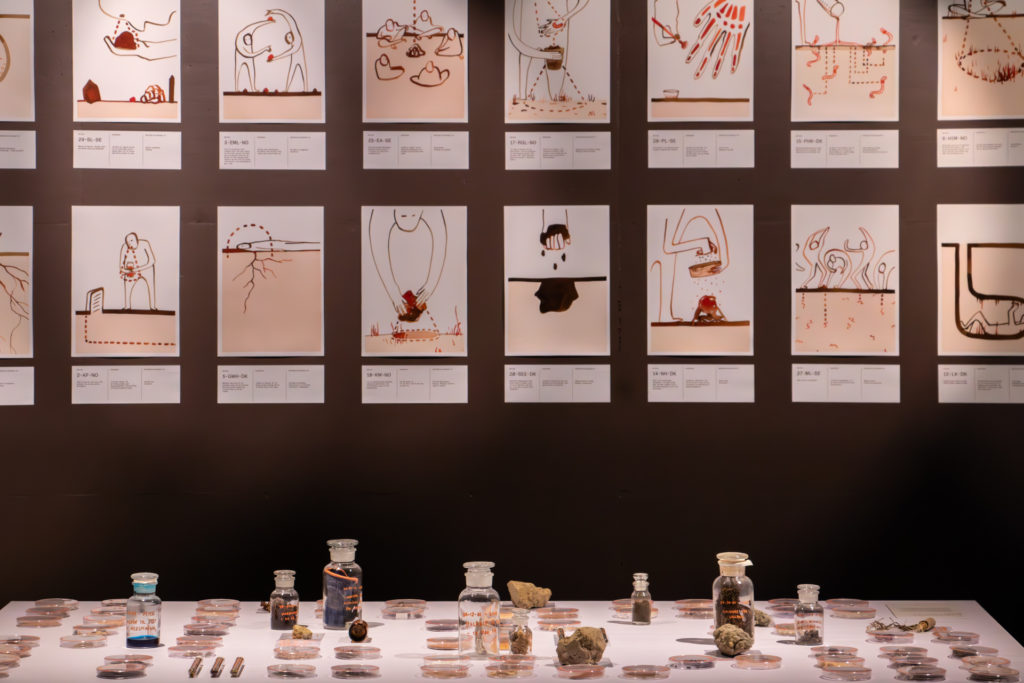
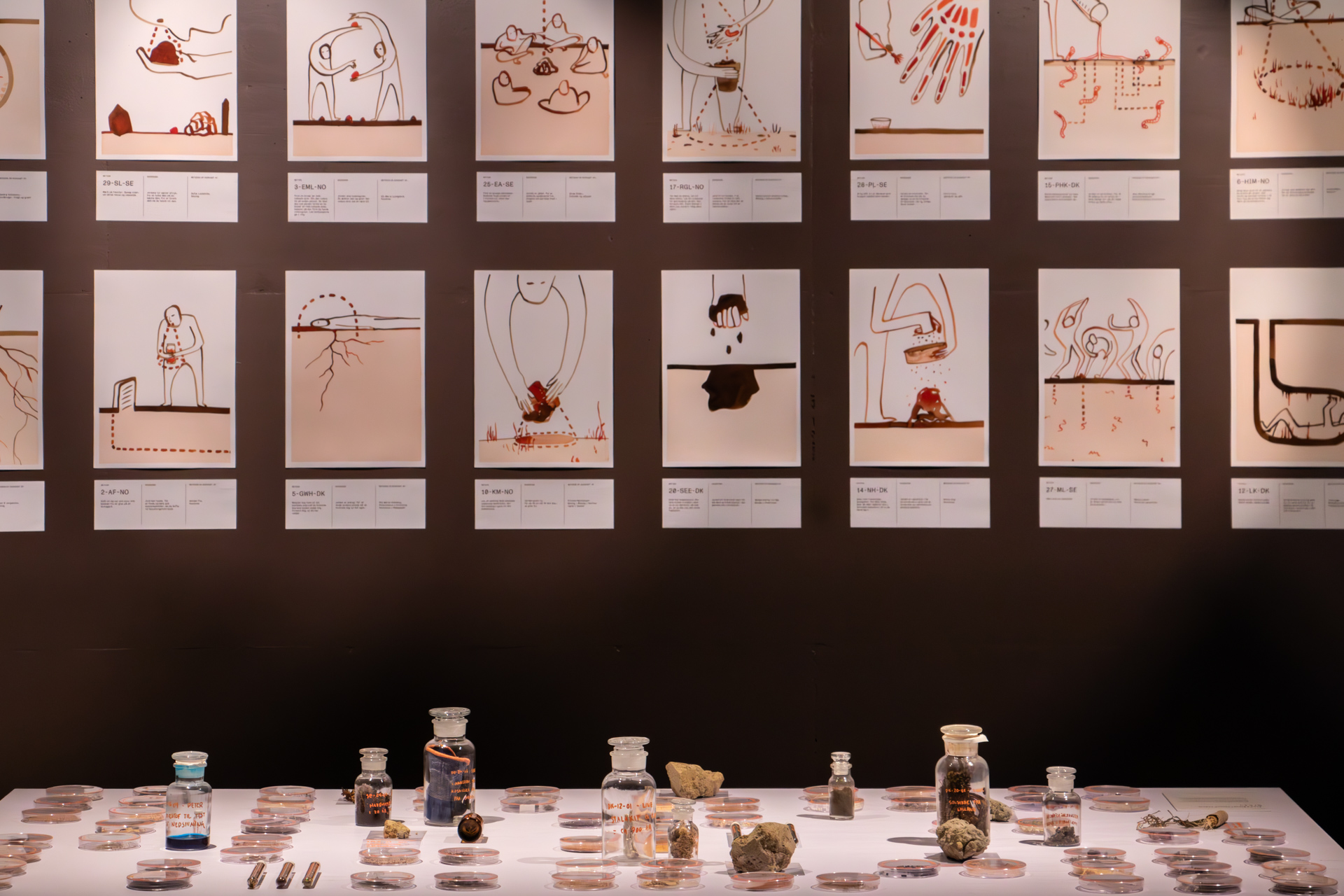
Detail from Maria Viftrup and Jordens hus's exhibition Jordsans at Norwegian Bio Art Arena on Vitenparken , autumn 2024. Photo: Maria Viftrup.

Multi-sensory curation of topsoil in Science Park's exhibitions

We humans have radically changed the Earth's ecosystems and agriculture, like other nature-based activities, has accelerated the Anthropocene era in which we now find ourselves. Humanistic research on the environment and climate, like natural science research, has the potential to function proactively and contribute to problem solutions. With this project we want to build a bridge between environmental humanities and museology at IKOS, UiO, and Vitenparken Campus Ås, a knowledge and experience center for food, environment and climate. 

The project's goals are twofold; 1) explore the Science Park's research dissemination and exhibitions about topsoil through action research based on environmental humanistic perspectives and sensory museology and 2) propose solutions for how to elevate the dissemination of topsoil through multisensory exhibitions and experiences. 

As an important part of the project, we take as our starting point the statement “…we consider exhibitions as knowledge-in-the-making rather than platforms for disseminating already-established insights.” from the book Exhibitions as research (Bjerregaard 2020). The project will therefore explore the concept of “exhibition as research” and result in an exhibition, in addition to publications . This exhibition will then be part of the larger bioart exhibition Experience Soils; humus, humans, hope, which is planned to be curated by the Norwegian BioArt Arena (NOBA at Vitenparken ) in 2025 as part of the research project Anthropogenic Soils (led by U. Münster at UiO). 

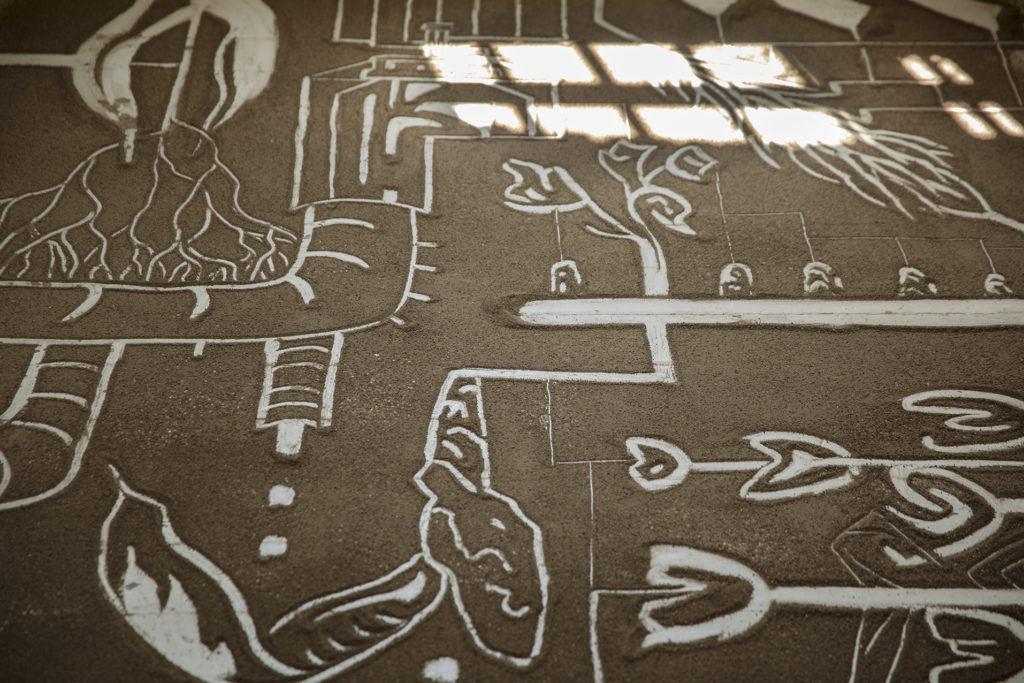
Detail from artwork by Maria Viftrup in the exhibition Rod/System, curated by Jordens Hus. Photo: Tine Bek.

Will "sense wash" the Science Park's exhibitions

In Norway, we spend one and a half billion of tax money on museums and science centers annually, but there is little research in sensory museology on how installations and artworks work on the audience. It is therefore relevant to ask; how do multisensory design elements affect the experience and how can narratives experienced through the senses affect the exhibition experience to ensure that the message of the exhibition and installations reaches the audience? (Hauan and Kolstø, Exhibitions as learning environments: a review of empirical research on students' science learning at Natural History Museums, Science Museums and Science Centres.)

Agriculture, the use of land, is the science, art and practice of cultivating the plants and animals that we will eat. A vital and worldwide food chain that has intertwined nature, culture and technology since the beginning of agriculture. What has shaped our surroundings more radically than agriculture? Yet food production, and not least topsoil, is experienced as an abstract concept by many. Research into plant production, livestock and soil as well. Science and experience centers, such as Vitenparken Campus Ås has taken on the task of raising the general public's understanding of topics such as food, the environment and climate. What steps can be taken to raise the public's experience and understanding of topsoil? The dissemination and communication of food and agricultural research in science centers should be "sensorially cleansed" to restore a stronger bond between people and food.

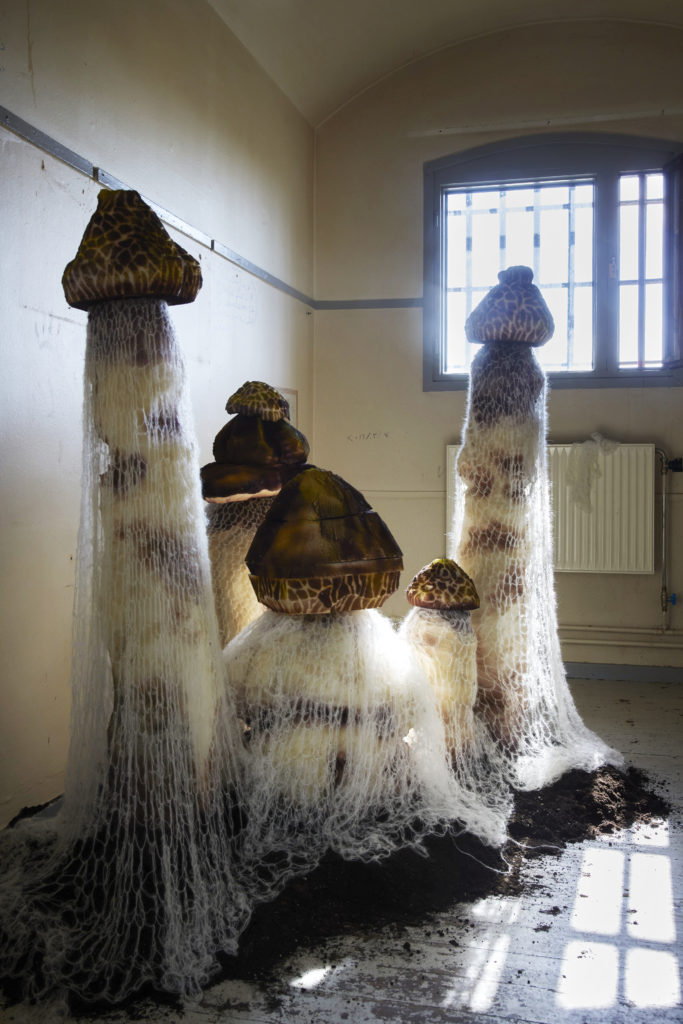
Detail from Marika Seidler's artwork in the exhibition Jord/Liv, curated by Jordens Hus. Photo: Benita Marcusen.

More information

Contact:
Elise Matilde Malik
elise@vitenparken.no

Instagram:
@meitemark1

Supervisors:

Brita Brenna
Professor of Museology
IKOS UiO

Hugo Reinert
Associate Professor in Environmental Humanities
IKOS UiO

Alexander R. Toland
Professor of Arts and Research
Director and Speaker, Ph.D. Program in Art & Design
Bauhaus University Weimar

Download the full project description .

Sustainable Eaters

Consumers in a sustainable Norwegian food system

FUNDED CITY

The Research Council of Norway

COOPERATION

The research project is led by Nofima, in collaboration with 26 partners from research, industry, the public sector and non-profit organizations. Participants in the project: BaRe, Grønt Punkt Norge AS, GS1 Norway, INN – Høgskolen i Innlandet, Karlstad University, Keep-it Technologies AS, Loop, Matprat (Nortura SA), Matvett AS, Mills AS, Multivac AS, NIBIO, NMBU, Nofima, NorgesGruppen ASA, NORSUS, Nortura SA, Orkla Foods Norge AS, OsloMet, Rema Distribusjon Norge AS, Rema 1000, Ruralis, Tromsø Municipality, Tromsø Matsentral, Vitenparken Campus Ås, Wipak Norway and Æra Strategic Innovation AS.

Background

The overall goal of the project is to increase understanding of and strengthen consumers' contribution to, a sustainable Norwegian food The entire value chain for food must be re-evaluated. The use of resources must be more efficient, food waste must be reduced, and the diet must be adjusted. Reports such as "Climakur 2030" have pointed to specific measures aimed at consumers to meet these challenges. There is no way around it; consumers must contribute to the shift towards a sustainable diet. To achieve this, we must re-think. There is a need to make changes in consumer behavior related to food choice, food waste and recycling of packaging materials.

Goal

The main goal of the project is to enable and strengthen consumers' contribution to achieving a sustainable Norwegian food system.

To enable this, the project aims to:

  • Develop intervention strategies, industry and policy recommendations for reduced food waste, healthy and sustainable diets, and increased recycling of food packaging.
  • Refine scientific knowledge on what sustainable food means in the Norwegian agroindustry context.
  • Develop knowledge, awareness, and new sustainability habits in the younger generation.
  • Elaborate on industry solutions that support consumers in embracing sustainable behaviours.
  • Optimize the dynamics of the online shopping value chain towards higher resource efficiency, lower food waste, and lower climate impact from producer to consumer.

Organization

  • The project will carry out the following tasks:
  • Identify consumer typology and behavior change
  • Evaluating behavioral effects on the value chain
  • Educate young generations and connected citizens
  • Develop industrial innovations
  • Project communication and dissemination.

The project consists of five work packages and four cases. These are outlined in the figure below.

The main goal of the project is to enable and strengthen consumers' contribution to achieving a sustainable Norwegian food system.