g

Network for folk research on school gardens and urban agriculture

The network will be an arena for the exchange of opinions, ideas and experiences about folk research, and stimulate increased focus on the further development of folk research aimed at school gardens and urban agriculture among the members of the network. Would you like to join?

Sign up for: Network for folk research on school gardens and urban agriculture at Vitenparken
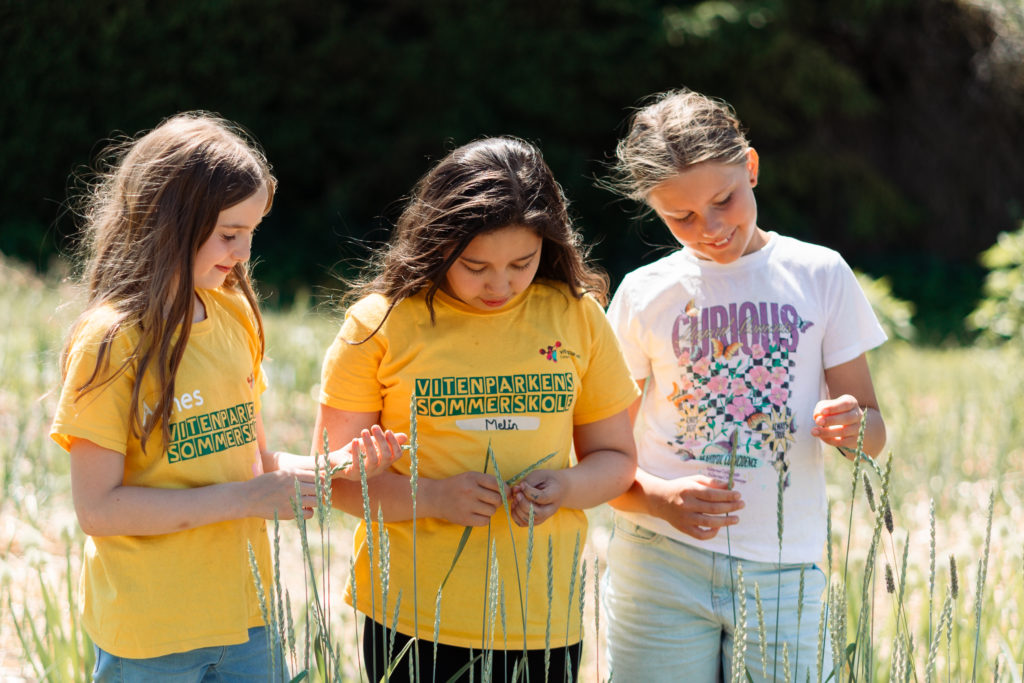
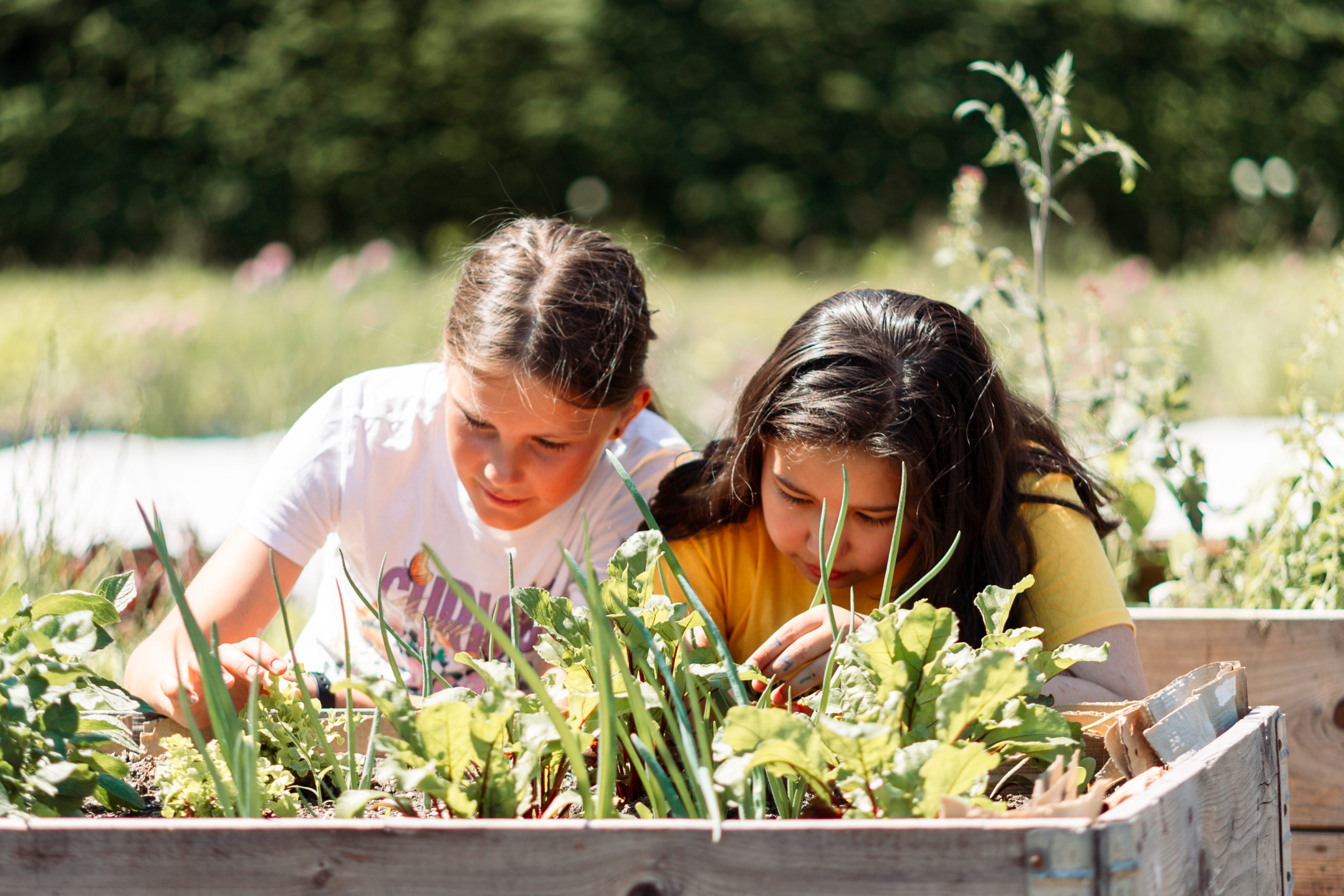
In the past year, VitenEnga has begun to develop into a hub where many players in research and education from the academic communities on and around Campus Ås connect. Photo: Vitenparken Campus As

VitenEnga as a folk research arena

VitenEnga is a garden area on Campus Ås that is both a school garden, an exhibition space and the production of vegetables for Andedammen Café. In the past year, VitenEnga has begun to develop into a hub where many actors in research and education from the academic communities on and around Campus Ås connect. With all these points of contact, we see that VitenEnga on Campus Ås is a unique gathering point for many academic communities in education, research, students and the leisure public. In addition to a practical and central location, it is also open to everyone year-round. This opens up (24/7) to being able to work with folk research in an arena that truly facilitates interdisciplinary networking and knowledge building across environments and demographic lines.

Here there is great potential to both extract unique data to develop the learning arena of the school garden and urban agriculture, but especially also to develop folk research. For example, one can look at the development of folk research beyond simply collecting data. Perhaps the participants can also be involved in analysis processes or formulating hypotheses? Folk research on and in school days and urban agriculture can be both natural science, social science, humanities research and artistic development work.

For each gathering in the network, we will collect data about the process from the participants. This will be done through logs, surveys and photos. The material can form the basis for evaluation and assessment of methods within folk research. Photo: Vitenparken .no.

Network collections on Vitenparken

How can local actors in the same terrain be connected and how should and can interdisciplinary collaboration around folk research be set up? We see great growth opportunities for the branch here and would like to cultivate it further through a series of conferences with an introduction to folk research, development and opportunities for folk research with VitenEnga as a starting point (interdisciplinary networking with the professional communities around us) and evaluation of ideas, initiatives and opportunities.

  • Tuesday, May 14, 2024 at Vitenparken .
    Introduction to folk research, needs assessment and planning of folk research in a school kindergarten context.
  • Tuesday 10 September 2024 at Vitenparken . NOTE! Internal meeting.
    Internal working meeting and idea development with the goal of developing a framework with measurable criteria, as well as exploring opportunities, benefits, pitfalls, risks and alternatives in the use of folk research in school gardens and urban agriculture.
  • Thursday, December 5, 2024 at Vitenparken .
    Exchange of experiences and summary of knowledge provided by participants.


National Network for Folk Research

Citizen research involves engaging and involving people who do not have a research background in research, in collaboration with researchers or research institutions. In Norwegian, we have chosen to use citizen science as an overarching term to describe activities where the public is involved in research in various ways and where the end result is new knowledge or insight. Citizen research is about the public and researchers helping each other to produce new scientific knowledge and insight. Often it is researchers who get help from the public to collect data (e.g. water samples), but it can also be projects started by private individuals or organized initiatives to investigate something in the local environment using scientific methods (source: forskningsrådet.no).

The project Folk Research on School Days and Urban Agriculture is supported by the Research Council of Norway in 2024 and is part of the National Network for Folk Research .


Do you want to participate?

Would you like to participate in the network for folk research on school gardens and urban agriculture?

Kontaktperson: Solveig Arnesen, solveig@vitenparken.no
Koordinator: Elise Matilde Malik
Markedsføring og kommunikasjon: Elina Gobeti
Grafiske design: Raquel Maria Marques

Sustainable Eaters

Consumers in a sustainable Norwegian food system

FUNDED CITY

The Research Council of Norway

COOPERATION

The research project is led by Nofima, in collaboration with 26 partners from research, industry, the public sector and non-profit organizations. Participants in the project: BaRe, Grønt Punkt Norge AS, GS1 Norway, INN – Høgskolen i Innlandet, Karlstad University, Keep-it Technologies AS, Loop, Matprat (Nortura SA), Matvett AS, Mills AS, Multivac AS, NIBIO, NMBU, Nofima, NorgesGruppen ASA, NORSUS, Nortura SA, Orkla Foods Norge AS, OsloMet, Rema Distribusjon Norge AS, Rema 1000, Ruralis, Tromsø Municipality, Tromsø Matsentral, Vitenparken Campus Ås, Wipak Norway and Æra Strategic Innovation AS.

Background

The overall goal of the project is to increase understanding of and strengthen consumers' contribution to, a sustainable Norwegian food The entire value chain for food must be re-evaluated. The use of resources must be more efficient, food waste must be reduced, and the diet must be adjusted. Reports such as "Climakur 2030" have pointed to specific measures aimed at consumers to meet these challenges. There is no way around it; consumers must contribute to the shift towards a sustainable diet. To achieve this, we must re-think. There is a need to make changes in consumer behavior related to food choice, food waste and recycling of packaging materials.

Goal

The main goal of the project is to enable and strengthen consumers' contribution to achieving a sustainable Norwegian food system.

To enable this, the project aims to:

  • Develop intervention strategies, industry and policy recommendations for reduced food waste, healthy and sustainable diets, and increased recycling of food packaging.
  • Refine scientific knowledge on what sustainable food means in the Norwegian agroindustry context.
  • Develop knowledge, awareness, and new sustainability habits in the younger generation.
  • Elaborate on industry solutions that support consumers in embracing sustainable behaviours.
  • Optimize the dynamics of the online shopping value chain towards higher resource efficiency, lower food waste, and lower climate impact from producer to consumer.

Organization

  • The project will carry out the following tasks:
  • Identify consumer typology and behavior change
  • Evaluating behavioral effects on the value chain
  • Educate young generations and connected citizens
  • Develop industrial innovations
  • Project communication and dissemination.

The project consists of five work packages and four cases. These are outlined in the figure below.

The main goal of the project is to enable and strengthen consumers' contribution to achieving a sustainable Norwegian food system.

The choir database

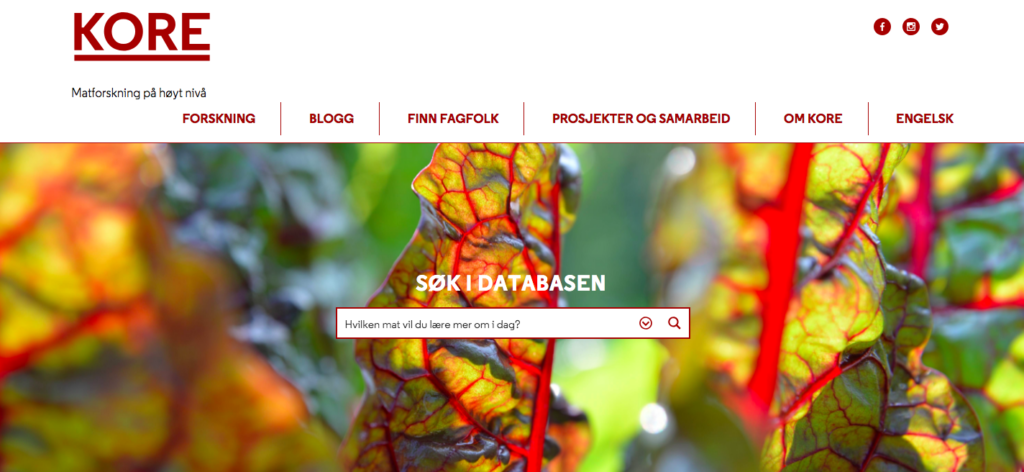
Vitenparken has entered into a collaboration agreement with the Kore Foundation. Both foundations work on disseminating research on food, agriculture and the environment. The goal of the collaboration is to make knowledge about food, food production and food quality accessible to even more people.

In the kore database, at www.kore.no, you can find research on food and soil yourself.

In October, we entered into a partnership with the Kore Foundation. The Kore Foundation is a non-profit organization that works for and with the dissemination of Norwegian and international food and agricultural research. One of Kore's main projects is a research database. The Kore database will be kept updated with the latest research, and in addition, we will work on joint events, exhibitions and digital content.

Through our collaboration on communicating research on sustainable food and agriculture, we want to be a national role model for innovative research communication.
-Elise Matilde Lund, CEO of the Kore Foundation.

We send out our own newsletters about research on food and soil. Sign up!

Living topsoil

One of the first collaborative projects is the cartoon Living Soil . The project is about biological life in the soil, and the goal is to increase children and young people's understanding of the usefulness and value of the soil . Soil conservation is about ensuring that today's population and our descendants have the opportunity to grow their own food on their own soil. Soil is a limited resource, which means that loss and degradation cannot be recovered within a human lifetime. Complex interactions take place in the soil and soil biology plays an important role in determining many soil properties.

Soil organisms have a huge impact on soil fertility, plant growth, soil structure, and carbon storage. Topsoil is also under pressure from housing, industrial, and transportation developments. With the project, we want to create knowledge-based and popular science information about topsoil, which will help more people participate in the public debate about the use and management of topsoil.

Visit kore.no to get in touch with researchers and professionals in food and soil research.

You can read more about the Koredatabase and the work of the foundation at kore.no.

–

Do you have any questions about this project? Send an email to elise@vitenparken.no. 

Precision agriculture

The pilot project will help to create a business cluster in Akershus where the strong IT sector will be connected to the agronomy environments in Ås. Furthermore, the pilot project will create awareness about business opportunities related to precision agriculture through various events, practical exhibitions and demonstrations.

Center for Precision Agriculture

The Center for Precision Agriculture will be an internationally leading competence environment within advanced agricultural technology and precision agriculture. It will be the hub of an industry cluster that connects players in the technology sector with the agronomy environment in Ås to unlock precision agriculture as a new growth industry in Norway. Akershus County Municipality, NMBU, Ås Municipality and the Follo Council have together developed a Cooperation Platform for Business Development in Follo.

A key point in the cooperation agreement is the focus on bioeconomy. The EU defines bioeconomy as the sustainable production and conversion of biomass into food, health and fiber products, into industrial products and into energy. A competence center for precision agriculture at Campus Ås will support the focus in the Cooperation Platform.

Become a FarmHero

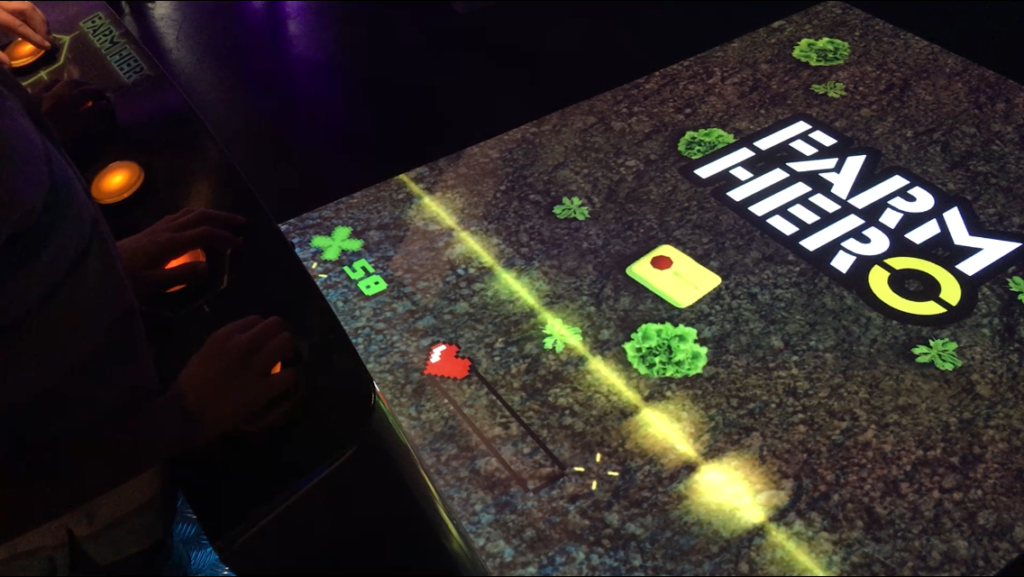
With our new installation, FarmHero, you can try your hand at being a precision farmer in the exhibition at Vitenparken . Go out into the field and remove the weeds – without damaging the lettuce and other food plants growing in the field. Take a seat at the interactive installation, focus and press the buttons! How many weeds can you remove before you run out of pesticides?

Read more about the FarmHero installation.

With our new installation, FarmHero, you can try your hand at being a precision farmer in the exhibition at Vitenparken .

The project is supported by the Follorådet.

Would you like to know more? The contact person for this project is:
Solveig Arnesen
Communications Manager
solveig@vitenparken.no

Are you interested in precision agriculture?
Find the latest research on fruit in the research database Kore.
Visit kore.no.

Follow network

We at Vitenparken wants to strengthen the business community in the Follo region, by showcasing exciting examples that can create pride and commitment. There is little knowledge among the public and politicians about the business community in our own region. We want to do something about this.

Vitenparken In 2015, the three-year project Triangle Cooperation was launched with support from Akershus County Council and the Follorådet.

Triangle arrangement on Vitenparken

Vitenparken has over the past 4 years developed as an independent player in the heart of Campus Ås. We are an open arena where business, research and the public meet in interesting and inspiring triangular events that trigger ideas and new collaboration. Our physical arena has opportunities for staging through visualization and physical exhibitions and can create a unique backdrop that creates different meetings and attractive knowledge experiences. We are the physical meeting place on Campus Ås that has the lowest threshold for creating contact between the different environments. Vitenparken is a growing arena. The number of guests who visited Vitenparken increased by 66%, i.e. from approximately 30,000 to approximately 50,000 from 2015 to 2016.


Bioeconomy collaboration platform

Vitenparken is now a member of the collaboration platform between Akershus County Council, NMBU and other campus institutions, as well as the Follo Council and Ås Municipality. We share the vision that Follo will become a region known for its innovative and competitive business sector based on extensive collaboration between research institutions, business and regional authorities. Relevant for Vitenparken is also to include the public. It is crucial to achieve more regional cooperation that Vitenparken is an arena where the business community, but also the public who live and work in the region, feel at home in the heart of the research environment.

The collaboration platform is based on the following objectives that are relevant to this project:

  • The bioeconomy will be a focus area in Follo.
  • Increase business interest in innovation and R&D work and participation in international projects.
  • Good local learning processes should be established through an innovative business environment.


6 work packages

  1. Follow-up of the survey
    Initially, the project conducted a survey among businesses in Follo.
  2. Municipal network
    Good cooperation between all Follo municipalities and Vitenparken as a neutral actor on Campus is off to a good start.
  3. Identify relevant research environments
    Identify research environments at Campus Ås that may be relevant for business and industry in the region to meet.
  4. Triangle arrangements
    Thematic events will be organized and carried out where this business community can present its activities and competitive situation, in meetings with the public and relevant research environments.
  5. Communication work
    Collaboration with several media actors is planned to help create increased awareness of the business community in Follo, and of Campus Ås. There is little business content in local and regional media.
  6. Physical communication arena
    An appropriate arena has been established for a professional and social meeting place.

Contact person

Solveig Arnesen
Communications Manager
solveig@vitenparken.no