CRISPR – Grades 8-10
The program lasts 90 minutes.
Max 30 students at a time
How can we use genetic engineering to solve the hunger crisis in a sustainable way?
The UN's Sustainable Development Goal number 2 is about eradicating hunger by the year 2030. The goal is to "end hunger, achieve food security and improved nutrition, and promote sustainable agriculture." In 2019, 688 million people were affected by hunger. Approximately 9% of the world's population! With increasing population growth, there will be more people on earth who need to eat. In order for fewer people to go hungry, more people must have access to nutritious food. At the same time, we must take care of the natural resources and biodiversity on earth. How can we eradicate hunger in a sustainable way?
In this teaching program, students gain insight into how genetic engineering with CRISPR Cas9 can be part of the solution to the hunger disaster, so that we achieve sustainability goal number 2.
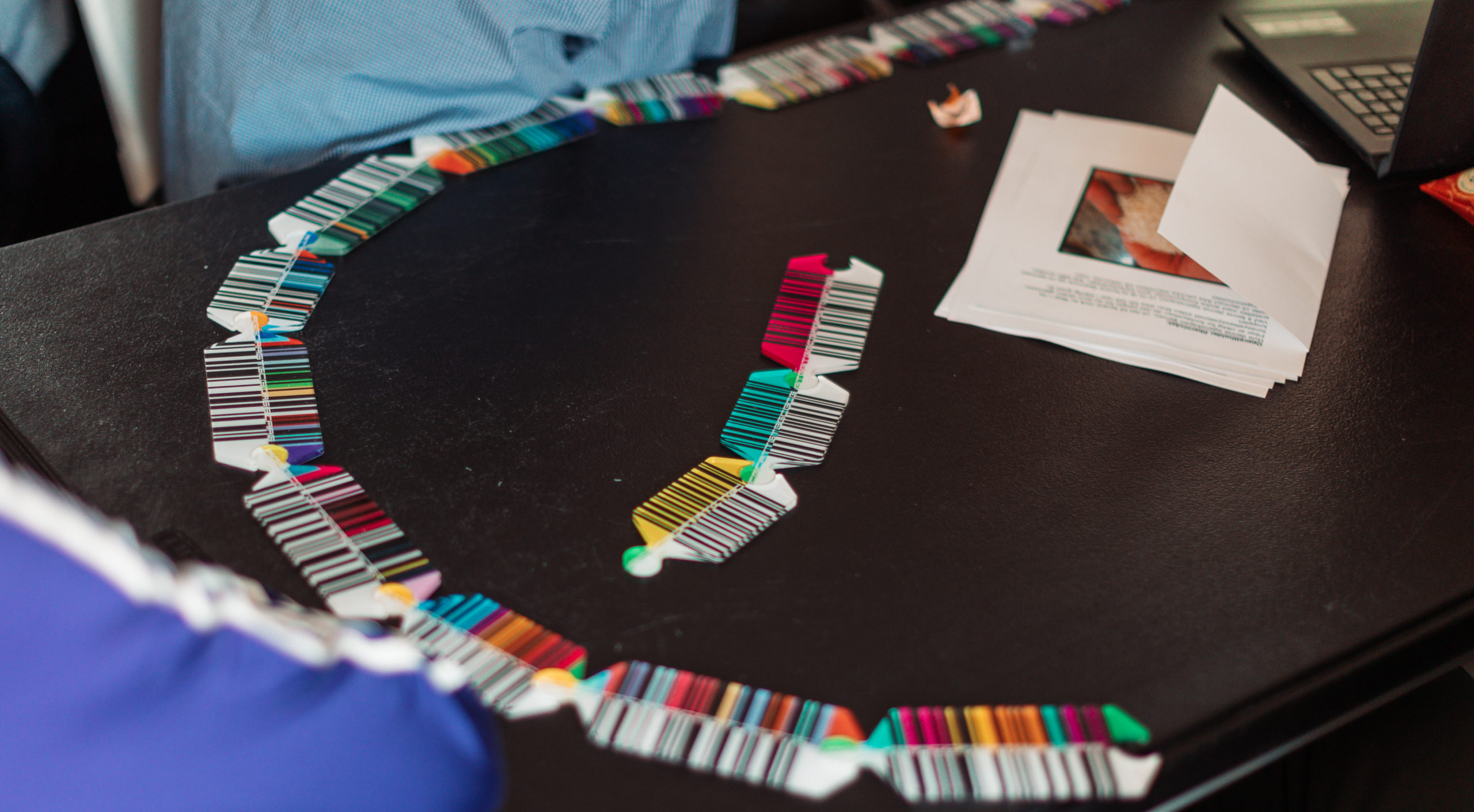
Students gain insight into how CRISPR Cas9 works at the micro level. At the same time, they must raise their sights in an engaging discussion assignment about the opportunities and challenges of using CRISPR Cas9 to achieve Sustainable Development Goal number 2.
Suitable for
The teaching program is suitable for students who have studied science in middle school and high school. See current competency goals below. It is an advantage if students have learned the basics of DNA, but it is not a requirement. The Science Park's educators adapt the program to the students' level and prior knowledge.
Interdisciplinarity
This teaching program includes elements from all three interdisciplinary themes in LK20, and could be a good starting point for collaboration across school subjects within:
- Sustainable development
- Democracy and citizenship
- Public health and life skills
Competence goals LK2020
Science (NAT01-04)
The goal of the training is for the student to be able to:
- provide examples of current research and discuss how new knowledge is generated through collaboration and a critical approach to existing knowledge
- give examples of and discuss current dilemmas related to the exploitation of natural resources and the loss of biodiversity
Social Studies (SAF01-04)
The goal of the training is for the student to be able to:
- Describe different dimensions of sustainable development and how they influence each other, and present measures for more sustainable societies.