Norsk Bruksgenbank SA receives over 3.5 million kroner in support from Sparebankstiftelsen DNB. The funds will help to use and preserve older Nordic vegetables and grain varieties, and increase awareness of Norwegian plant heritage among children and young people. Vitenparken is a partner in the new project.
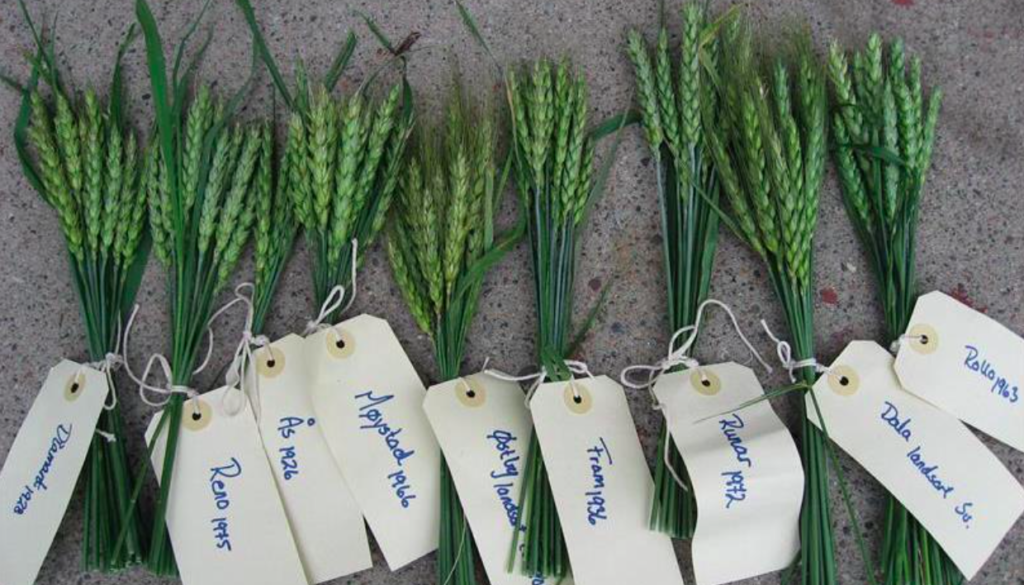
Photo: Norwegian Agricultural Advisory Service Østafjells.
Older and new plant varieties
This will facilitate the use of our own plant heritage and strengthen Norwegian food diversity. Having our own varieties available for use contributes to food security, either by using the varieties as they are, or as a basis for developing new varieties. It also appears that some older varieties may be more robust in the face of climate change and extreme weather. – The DNB Savings Bank Foundation has children and young people as its main target group and nature and outdoor activities as one of four purpose areas for grants. Here, we are looking for projects that strengthen natural knowledge and that stimulate each individual to take care of nature. The projects that the Norwegian Gene Bank has now received funding to initiate respond to precisely this, and will contribute in a good way to increasing knowledge about taking care of plant heritage, contributing to natural diversity and sustainable food production, says Eva Grothe, advisor to the DNB Savings Bank Foundation.
Preservation through use and long-term storage
– It is very pleasing that the Savings Bank Foundation approved our application. With these funds, we will have the opportunity to build a safer model for conservation through use. In addition, we can create a safe way for the processing and long-term storage of plant genetic material, so that maintenance is reduced, says Jasper Kroon. He is chairman of the board of the Norwegian Agricultural Gene Bank and professional manager of Solhatt organic horticulture, which is responsible for the propagation of vegetable seeds from older Norwegian varieties.
In recent years, farmer Johan Swärd, one of our foremost pioneers in investigating the properties and using the old Norwegian and Nordic grain varieties, has built up and preserved the grain stock in the Commercial Gene Bank for grain. Now this work is being transferred to the Norwegian Commercial Gene Bank, where Økologisk Spesialkorn DA will be responsible for propagation. A grain seed warehouse will be established at Hellerud farm, and Norges Vel will be responsible for storage and distribution.
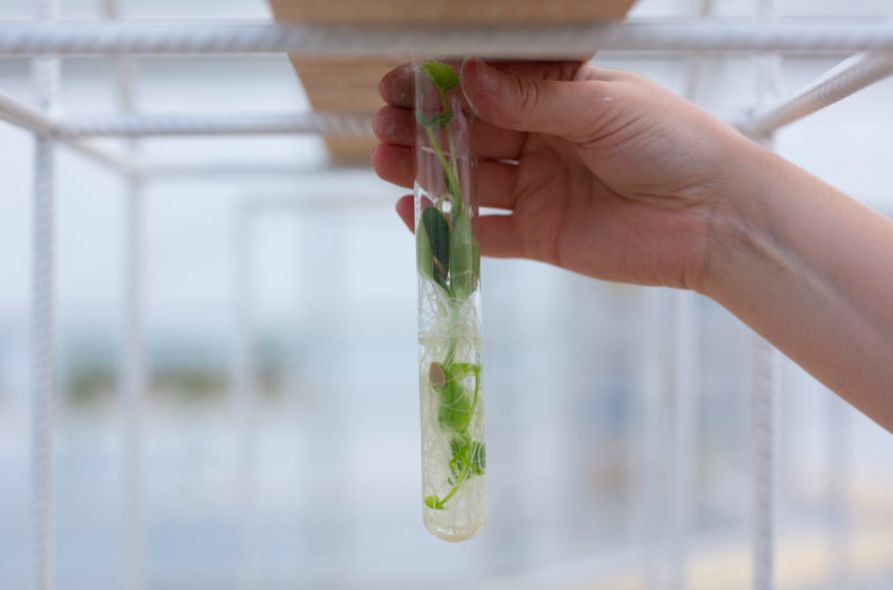
Photo: Vitenparken Campus Ås.
Reaching out to children and young people together with Vitenparken
The Norwegian self-sufficiency rate was approximately 50 percent in 2018. In an increasingly turbulent world and with a changing climate, this is very low and something that should raise concern. Influencing awareness about the opportunities our plant heritage provides, and what value it has, is therefore becoming increasingly important.
– We want to increase knowledge of and interest in our plant heritage among future generations. In collaboration with Vitenparken Campus Ås will be hosting 8-10 food workshops where children and young people can learn about the food we eat and how it is produced. We will also develop information material and activities aimed at young people interested in agriculture and sustainable food production. As part of the work of Vitenparken The research database Kore will also be updated with new research on plant genetic material. And we will target young farmers, who are the ones who will ultimately safeguard the plant heritage, says Henriette Vivestad, project manager at Norges Vel.
Researcher exhibition center for Norwegian plant heritage
– Through urbanization, knowledge of where food comes from has become more distant than in the past when you often knew the farmer you bought your food from. A permanent physical dissemination center to showcase our plant heritage and make diversity more accessible will help to refocus this.
There are several locations in Norway that could be suitable and in the project we will look at the market for this and potential physical locations of such a center, in addition to mapping potential investors, says Vivestad.
She envisions that such a center could either be a new stand-alone center or be connected to existing centers that have the potential for expansion. And she cites Kornets Hus in Hjørring, Denmark, as a good example to learn from.
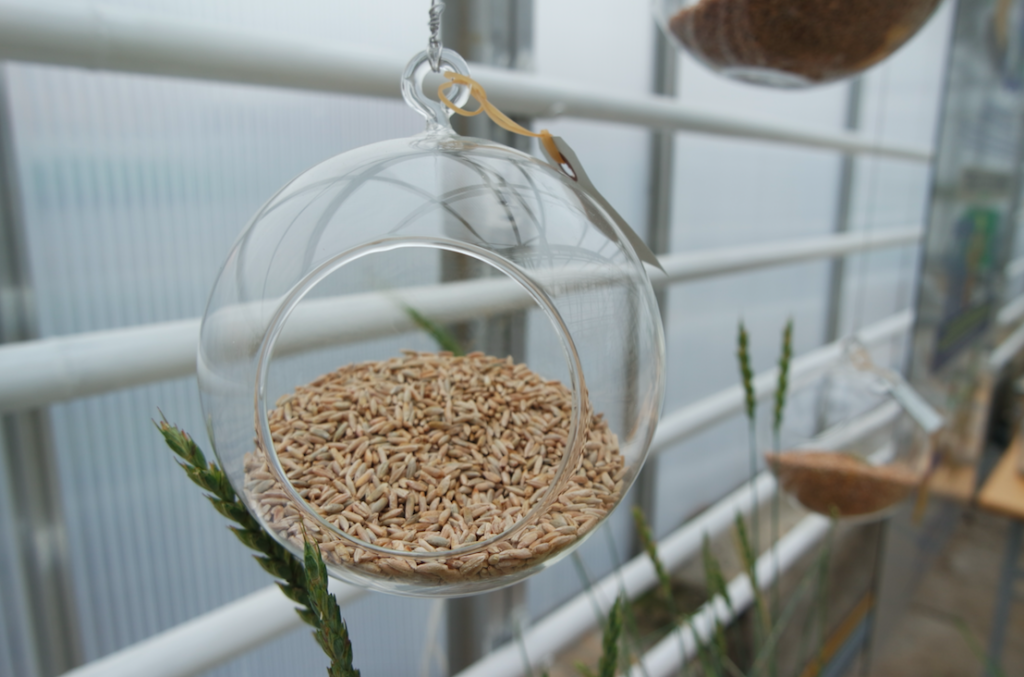
Photo: Vitenparken Campus Ås.
Facts about Norsk Bruksgenbank and the Sparebankstiftelsen
Norwegian Gene Bank SA
Together with breeders of older plant varieties, Norges Vel established the Norwegian Agricultural Gene Bank SA in the fall of 2018. The cooperative aims to preserve older plant varieties by breeding forgotten varieties from gene banks so that they are available for use. Today, most varieties grown are imported, but now arrangements are being made to use our own plant heritage and strengthen food diversity. Having our own varieties available for use contributes to food security, either by using the varieties as they are, or as a basis for developing new varieties. It also appears that some older varieties may be more robust in the face of climate change and extreme weather. Co-owners of the cooperative are Økologisk Spesialkorn DA , Solhatt Økologisk Hagebruk AS , and Norges Vel . Norges Vel also has a secretariat function for the Norwegian Agricultural Gene Bank.
Savings Bank Foundation DNB
The DNB Savings Bank Foundation is an independent foundation that provides contributions to charitable causes. The foundation owns around 8 percent of the shares in DNB, and the dividends from these shares are used for various socially beneficial projects. The foundation's vision is "We unleash good forces", and they support projects that create engagement, involve volunteers and make a positive contribution to children and young people. They engage in philanthropy - not sponsorship. The DNB Savings Bank Foundation was established by Gjensidige NOR Sparebank in 2002, and since its inception has allocated over NOK 4 billion to charitable causes.
–
Do you have any questions regarding this matter? Send an email to elise@vitenparken.no.