Higher average temperatures and more precipitation will initially provide better growing conditions and a longer growing season in the years to come. It will probably be necessary to introduce new varieties, and cultivation techniques will have to be adapted to changed production conditions.
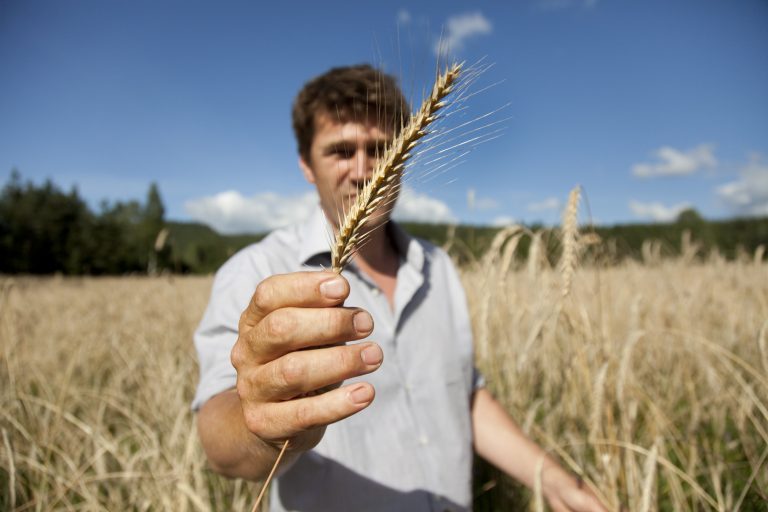
Photo: Organic specialty grain.
The Norwegian growing season
In Norway, there are significant variations in weather and climate between and within different parts of the country. Temperatures are higher compared to other areas at the same latitudes due to favorable air and ocean currents. However, the conditions for grain production are marginal, since the growing season is short and relatively wet, which leads to a relatively low yield level. According to climate models, Norway is among the few areas in Europe where a positive effect of climate change on crop production is expected, but increased precipitation and more extreme weather are challenges that must be addressed.
Today, low temperatures and a short growing season are limiting factors for crop production, and an increase in temperature could significantly improve growing conditions in Norwegian agriculture. On the other hand, increased precipitation and more extreme weather in the future will present challenges that must be addressed.
To take advantage of the benefits of increased temperatures and longer growing seasons, agriculture must develop knowledge-based adaptations. It will be important to be able to deal with new diseases, insects and weeds that will appear in a warmer climate.
New strategies for plant protection
Development and implementation of integrated pest management strategies may be necessary to avoid an increased need for pesticides. Robust varieties and adapted agronomy to a changed climate are also needed to be able to exploit the new climatic conditions. In addition, it will be essential to find and implement measures that reduce the risk of soil compaction.
Selection of species and varieties
An important consequence of the increase in temperature is that the growing season will become significantly longer. An increase of 1–2 months is estimated in large parts of the country, and up to 2–3 months in some areas, by 2100.
Climate change will affect the growing conditions of plants through changes in temperature, rainfall and intensity. We can therefore expect new growing conditions in the future, and must develop varieties and use older varieties that can exploit new growing conditions.
Sources
- Norwegian Environment Agency: Climate adaptation in agriculture
- NIBIO: Growing grain in a changing climate