The Swedjerugen makes the bread juicy and flavorful.
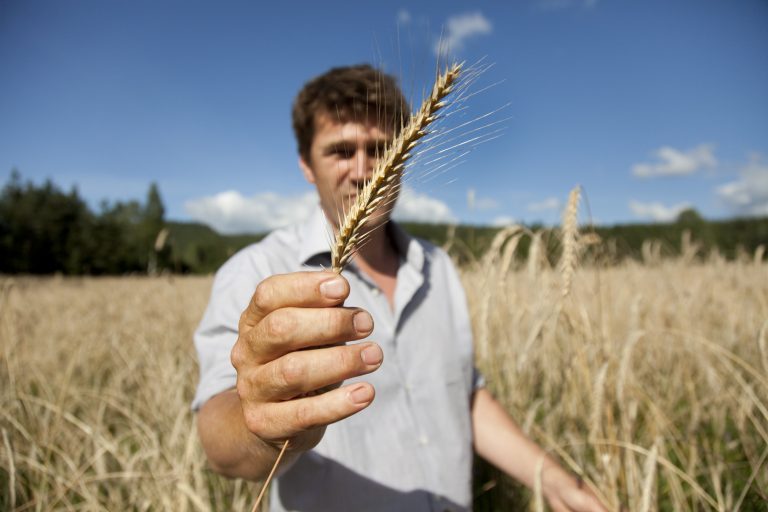
Photo: Organic specialty grain.
The survival of the Swedjerug
Swedjerugen is a rye variety that came to Norway in the 17th century, and gets its name from the practice of swidden farming. It was primarily the Forest Finns who were known for this way of growing rye. For a period, it was considered a lost variety – until Martin Tvengsberg found ten grains in a barn in Finnskogen sometime in the 1970s. Seven of these grains germinated and are the origin of today's Norwegian swedjerugen fields. After the conifers were harvested, the best wood was taken out for timber and planks, while the brushwood, twigs and undergrowth were burned on site. The rye was then sown while the ashes were still smoldering. Ash is usually alkaline, but ash from conifers is acidic, and swedjerugen tolerates low pH. In the autumn, the long rye plant was grazed by livestock, and the grazing caused the plant to bush up. The following year, the rye was harvested for human food. It could then be 2.5 meters high, and from the same plant 94 stalks could come, with over 50 grains per ear. Because it grows bushy, it does not need to be sown as densely as other grains. You only use about 10 kg. per hectare, compared to about 20 when growing modern grains.
In recent times, rye has enjoyed a renaissance because it has a lot of flavor and is very high in protein. Rye can have up to twice the protein content of modern rye, and is also rich in fiber.