g

SmakÅs is an annual food and technology festival, organized in collaboration between Vitenparken and Ås municipality (2018 – pdd)

The Science Park's costumed science hosts will be participating in the center of Ås with our own installation, Brøleparten, developed with support from Infinitum. The installation focuses on circularity and pledges.

Vitenparken Campus Ås collaborates annually with Ås municipality on SmakÅs , a two-day food and technology festival. The Science Center is responsible for the free Family Day on Sundays, while Ås municipality coordinates the market day on Saturday.

SmakÅs is Norway's only food and technology festival with sustainable development as its main focus. Every autumn we invite young and old from Ås and the surrounding area to the festival at Campus Ås and in the city center. Previously, SmakÅs was a one-day festival divided between Ås city center and Vitenparken ; in 2022 we expanded to more days, with market day on Saturday and Family Day on Vitenparken Sunday. Since 2023, Vitenparken had the main responsibility for the festival's marketing and graphic profile.

As a science center for food and sustainable development, we contribute with a comprehensive outreach program for children and families.

In the school and kitchen garden , VitenEnga, our facilitators – under the main responsibility of Håkon Mella , educator and school garden facilitator – lead practical activities that connect growing, cooking and sustainability. The goal is to use the school garden as an interdisciplinary classroom where children and adults learn about the connection between ecosystems, how food is produced and what food security means – and why this must be protected for future generations.

We also arrange academic events about the history of science and research at Campus Ås, with historical tours and lectures – including about the history of Jarlsberg cheese, developed at NMBU and Norway's most internationally known cheese – as well as current lectures on food and food safety from leading academic circles. Our guides, many with research backgrounds and local roots in Ås and NMBU, take groups through Norway's most beautiful campus, while science hosts lead visitors to Korsmo's weed garden in collaboration with NIBIO to share knowledge about useful plants and "weeds".

Vitenparken houses NOBA – Norwegian BioArt Arena , Norway's first and only arena for bioart. During SmakÅs we have shown films, exhibitions and children's activities that promote the art form and stimulate children's creativity – to awaken new perspectives on nature, the environment and society.

Professor Roger Abrahamsen gives a lecture about Jarlsberg cheese at Family Day 2024

In our MatLab, we explore cooking from both sustainable and technological perspectives. Children can use a pancake robot to design and cook pancakes, and they can make their own salt. Our science hosts make nitrogen ice cream – a crowd favorite while also explaining the chemistry behind it.

The stations offer activities that both taste and explain, such as "make your own slush", used to illustrate physical principles (melting/cold) and link this to climate.

As a science center known for edible insects, we have a station where children and adults can taste – and learn about the climate and nutritional benefits. We also introduce plant-based protein snacks as the food of the future, to teach about sustainable consumption and what the diet of the future could look like.

Our presenter Frederic Lindboe engages the audience with science shows that combine humor, energy and learning for both children and adults. In addition, we offer a wide range of coding activities, from Bit:Bot to Sphero, and interactive installations developed in-house through our subsidiary Inspire to Action – most famously the Roaring Panther.

In 2024, nearly 5,000 people visited the festival in Ås over two days. This is probably the biggest and most important event for children in Ås this year. We are proud to offer this free of charge to residents and visitors. The Family Day alone attracts around 2,000 visitors.

Would you like to sponsor Family Day?

Contribute to stronger communication about food and sustainability, and to offer cultural and educational experiences for children and families – regardless of socio-economic background. Contact us at elina@vitenparken.no or marked@vitenparken.no.

Responsible at Vitenparken :


Elina Gobeti
Marketing and Communications Manager
elina@vitenparken.no

Graphic design:
– Raquel Marques
raquel@vitenparken.no

Network for folk research on school gardens and urban agriculture

The network will be an arena for the exchange of opinions, ideas and experiences about folk research, and stimulate increased focus on the further development of folk research aimed at school gardens and urban agriculture among the members of the network. Would you like to join?

Sign up for: Network for folk research on school gardens and urban agriculture at Vitenparken

In the past year, VitenEnga has begun to develop into a hub where many players in research and education from the academic communities on and around Campus Ås connect. Photo: Vitenparken Campus As

VitenEnga as a folk research arena

VitenEnga is a garden area on Campus Ås that is both a school garden, an exhibition space and the production of vegetables for Andedammen Café. In the past year, VitenEnga has begun to develop into a hub where many actors in research and education from the academic communities on and around Campus Ås connect. With all these points of contact, we see that VitenEnga on Campus Ås is a unique gathering point for many academic communities in education, research, students and the leisure public. In addition to a practical and central location, it is also open to everyone year-round. This opens up (24/7) to being able to work with folk research in an arena that truly facilitates interdisciplinary networking and knowledge building across environments and demographic lines.

Here there is great potential to both extract unique data to develop the learning arena of the school garden and urban agriculture, but especially also to develop folk research. For example, one can look at the development of folk research beyond simply collecting data. Perhaps the participants can also be involved in analysis processes or formulating hypotheses? Folk research on and in school days and urban agriculture can be both natural science, social science, humanities research and artistic development work.

For each gathering in the network, we will collect data about the process from the participants. This will be done through logs, surveys and photos. The material can form the basis for evaluation and assessment of methods within folk research. Photo: Vitenparken .no.

Network collections on Vitenparken

How can local actors in the same terrain be connected and how should and can interdisciplinary collaboration around folk research be set up? We see great growth opportunities for the branch here and would like to cultivate it further through a series of conferences with an introduction to folk research, development and opportunities for folk research with VitenEnga as a starting point (interdisciplinary networking with the professional communities around us) and evaluation of ideas, initiatives and opportunities.

  • Tuesday, May 14, 2024 at Vitenparken .
    Introduction to folk research, needs assessment and planning of folk research in a school kindergarten context.
  • Tuesday 10 September 2024 at Vitenparken . NOTE! Internal meeting.
    Internal working meeting and idea development with the goal of developing a framework with measurable criteria, as well as exploring opportunities, benefits, pitfalls, risks and alternatives in the use of folk research in school gardens and urban agriculture.
  • Thursday, December 5, 2024 at Vitenparken .
    Exchange of experiences and summary of knowledge provided by participants.


National Network for Folk Research

Citizen research involves engaging and involving people who do not have a research background in research, in collaboration with researchers or research institutions. In Norwegian, we have chosen to use citizen science as an overarching term to describe activities where the public is involved in research in various ways and where the end result is new knowledge or insight. Citizen research is about the public and researchers helping each other to produce new scientific knowledge and insight. Often it is researchers who get help from the public to collect data (e.g. water samples), but it can also be projects started by private individuals or organized initiatives to investigate something in the local environment using scientific methods (source: forskningsrådet.no).

The project Folk Research on School Days and Urban Agriculture is supported by the Research Council of Norway in 2024 and is part of the National Network for Folk Research .


Do you want to participate?

Would you like to participate in the network for folk research on school gardens and urban agriculture?

Kontaktperson: Solveig Arnesen, solveig@vitenparken.no
Koordinator: Elise Matilde Malik
Markedsføring og kommunikasjon: Elina Gobeti
Grafiske design: Raquel Maria Marques

Jordsans – The Science Park's first industrial PhD by Elise Matilde Malik (2023–2026)

The doctoral project Jordsans is the Science Park's first industrial PhD (2023-2026). The project will involve employees at Vitenparken , Elise Matilde Malik, explore different ways of conveying topsoil through Vitenparken exhibitions. The doctorate is a collaboration with the Centre for Museum Studies and the research community associated with Environmental Humanities at the Faculty of Humanities, University of Oslo.

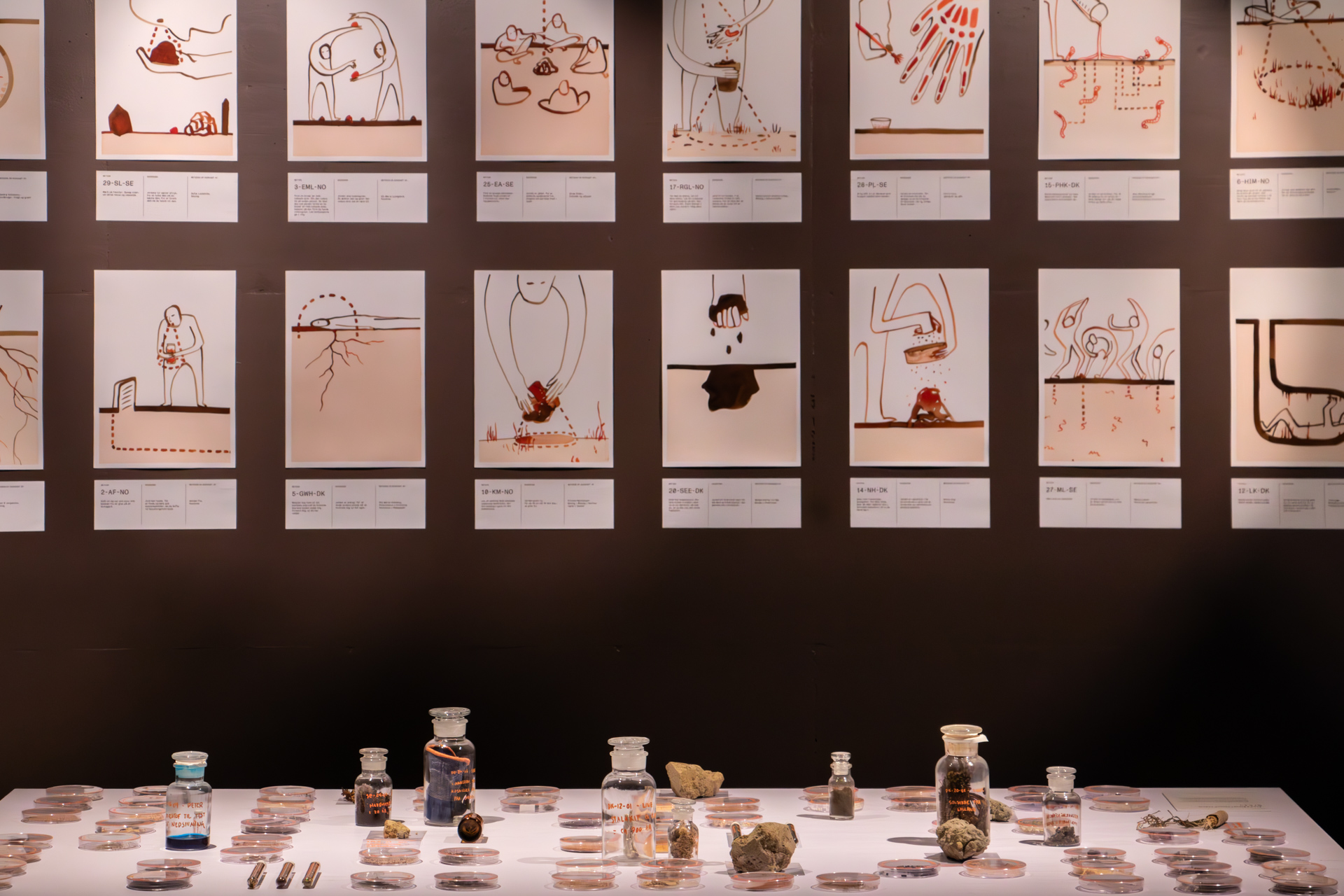
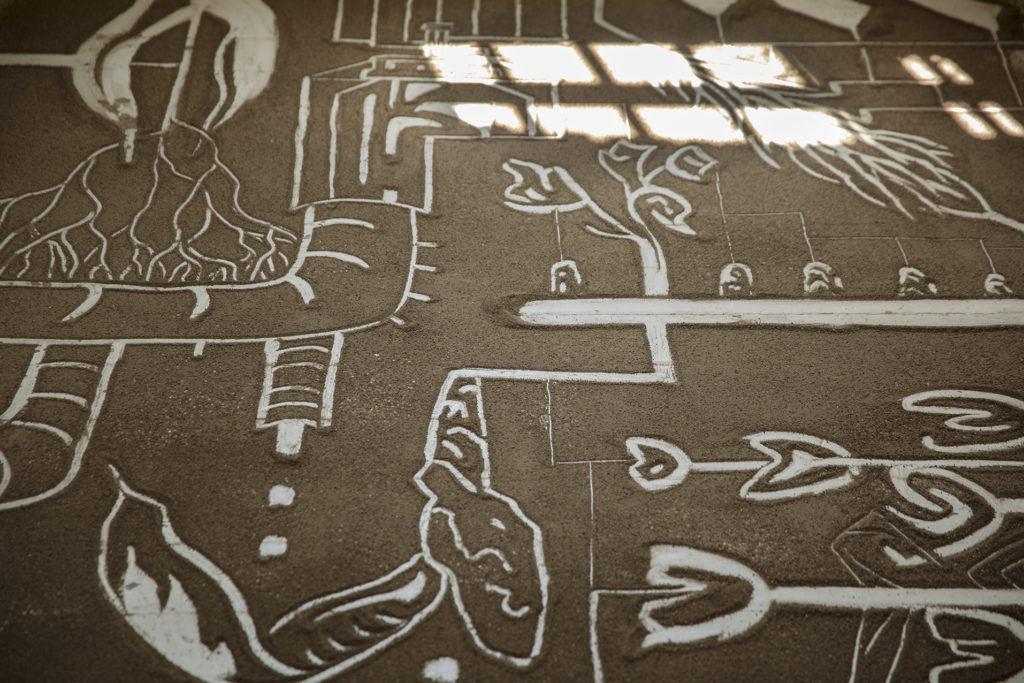
Detail from Maria Viftrup and Jordens hus's exhibition Jordsans at Norwegian Bio Art Arena on Vitenparken , autumn 2024. Photo: Maria Viftrup.

Multi-sensory curation of topsoil in Science Park's exhibitions

We humans have radically changed the Earth's ecosystems and agriculture, like other nature-based activities, has accelerated the Anthropocene era in which we now find ourselves. Humanistic research on the environment and climate, like natural science research, has the potential to function proactively and contribute to problem solutions. With this project we want to build a bridge between environmental humanities and museology at IKOS, UiO, and Vitenparken Campus Ås, a knowledge and experience center for food, environment and climate. 

The project's goals are twofold; 1) explore the Science Park's research dissemination and exhibitions about topsoil through action research based on environmental humanistic perspectives and sensory museology and 2) propose solutions for how to elevate the dissemination of topsoil through multisensory exhibitions and experiences. 

As an important part of the project, we take as our starting point the statement “…we consider exhibitions as knowledge-in-the-making rather than platforms for disseminating already-established insights.” from the book Exhibitions as research (Bjerregaard 2020). The project will therefore explore the concept of “exhibition as research” and result in an exhibition, in addition to publications . This exhibition will then be part of the larger bioart exhibition Experience Soils; humus, humans, hope, which is planned to be curated by the Norwegian BioArt Arena (NOBA at Vitenparken ) in 2025 as part of the research project Anthropogenic Soils (led by U. Münster at UiO). 

Detail from artwork by Maria Viftrup in the exhibition Rod/System, curated by Jordens Hus. Photo: Tine Bek.

Will "sense wash" the Science Park's exhibitions

In Norway, we spend one and a half billion of tax money on museums and science centers annually, but there is little research in sensory museology on how installations and artworks work on the audience. It is therefore relevant to ask; how do multisensory design elements affect the experience and how can narratives experienced through the senses affect the exhibition experience to ensure that the message of the exhibition and installations reaches the audience? (Hauan and Kolstø, Exhibitions as learning environments: a review of empirical research on students' science learning at Natural History Museums, Science Museums and Science Centres.)

Agriculture, the use of land, is the science, art and practice of cultivating the plants and animals that we will eat. A vital and worldwide food chain that has intertwined nature, culture and technology since the beginning of agriculture. What has shaped our surroundings more radically than agriculture? Yet food production, and not least topsoil, is experienced as an abstract concept by many. Research into plant production, livestock and soil as well. Science and experience centers, such as Vitenparken Campus Ås has taken on the task of raising the general public's understanding of topics such as food, the environment and climate. What steps can be taken to raise the public's experience and understanding of topsoil? The dissemination and communication of food and agricultural research in science centers should be "sensorially cleansed" to restore a stronger bond between people and food.

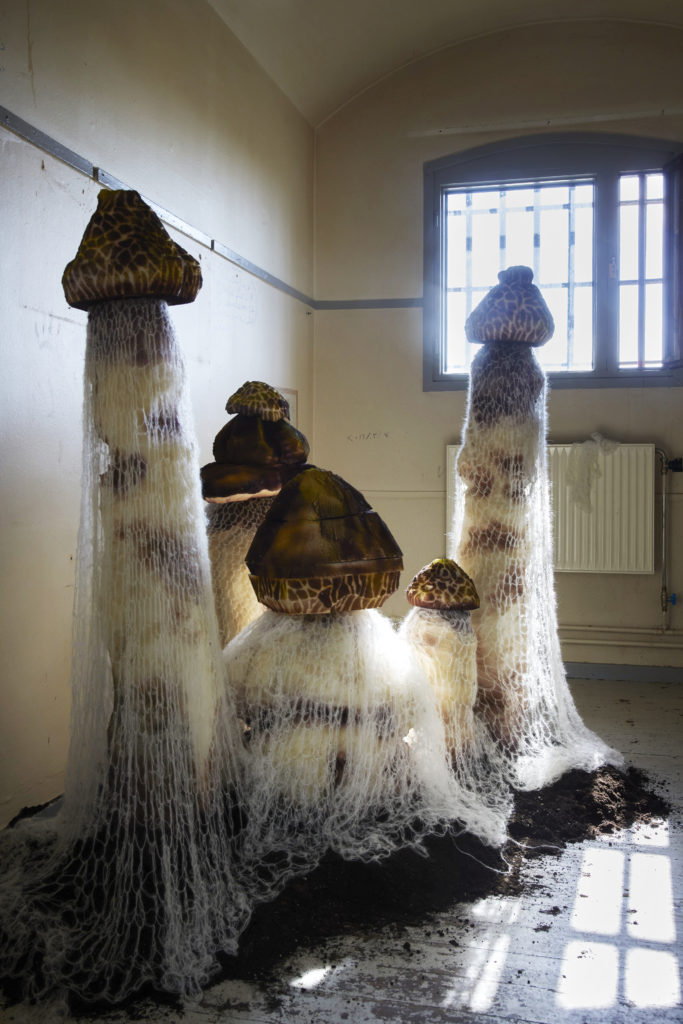
Detail from Marika Seidler's artwork in the exhibition Jord/Liv, curated by Jordens Hus. Photo: Benita Marcusen.

More information

Contact:
Elise Matilde Malik
elise@vitenparken.no

Instagram:
@meitemark1

Supervisors:

Brita Brenna
Professor of Museology
IKOS UiO

Hugo Reinert
Associate Professor in Environmental Humanities
IKOS UiO

Alexander R. Toland
Professor of Arts and Research
Director and Speaker, Ph.D. Program in Art & Design
Bauhaus University Weimar

Download the full project description .

Bioart in high school

Bioart for high school is an art communication project where students learn about art through making art themselves, under the guidance of an artist. Bioart unites natural science, ethics, philosophy, art , language and society, and thus the art communication becomes part of an interdisciplinary project. 

The project started in the 2020/21 school year, in collaboration with the VG1 explorer class at Frogn upper secondary school . The explorer class is a class in the specialization field of study. They work project-based, and have six different, interdisciplinary project periods during the year. Vitenparken has developed the project in collaboration with the teachers at Frogn vgs and artist Hege Tapio, who is affiliated with the Norwegian BioArt Arena (NOBA).

The students have explored bioart through participation in the bioart symposium, training and guidance from artists and Science Park educators. The teachers have also received an introduction to bioart, and have built the teaching during the project period around it. This year's project added the theme of post-apocalypse. The students have worked on imagining an apocalypse, and in particular focused on imagining how the world might move forward after the dust has settled.

The students' work will be exhibited at Vitenparken as soon as we can open to visitors again.

We have received funding to continue the project through the 2021/22 and 2022/23 school years, as well as to expand the project with a new school. The project is supported by the DNB Savings Bank Foundation .

savings bank foundation

New gift for Norwegian plant heritage

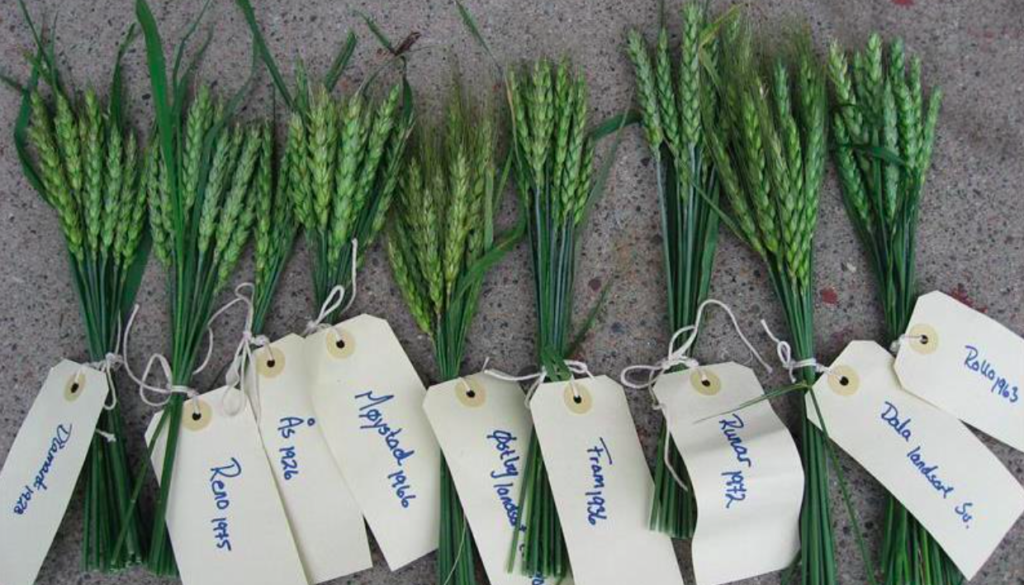
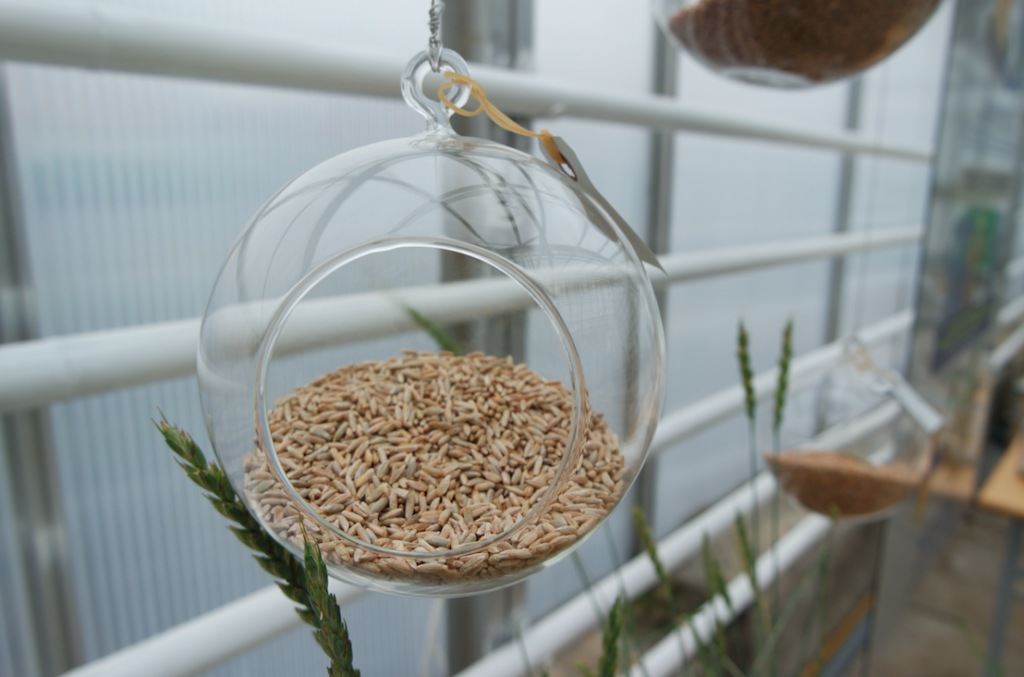
Norsk Bruksgenbank SA receives over 3.5 million kroner in support from Sparebankstiftelsen DNB. The funds will help to use and preserve older Nordic vegetables and grain varieties, and increase awareness of Norwegian plant heritage among children and young people. Vitenparken is a partner in the new project and has developed a teaching program with a graphic novel, films, online resources and an exhibition installation. Read more here .

Photo: Vitenparken Campus Ås.

Older and new plant varieties

This will facilitate the use of our own plant heritage and strengthen Norwegian food diversity. Having our own varieties available for use contributes to food security, either by using the varieties as they are, or as a basis for developing new varieties. It also appears that some older varieties may be more robust in the face of climate change and extreme weather. – The DNB Savings Bank Foundation has children and young people as its main target group and nature and outdoor activities as one of four purpose areas for grants. Here, we are looking for projects that strengthen natural knowledge and that stimulate each individual to take care of nature. The projects that the Norwegian Gene Bank has now received funding to initiate respond to precisely this, and will contribute in a good way to increasing knowledge about taking care of plant heritage, contributing to natural diversity and sustainable food production, says Eva Grothe, advisor to the DNB Savings Bank Foundation.

Preservation through use and long-term storage

– It is very pleasing that the Savings Bank Foundation approved our application. With these funds, we will have the opportunity to build a safer model for conservation through use. In addition, we can create a safe way for the processing and long-term storage of plant genetic material, so that maintenance is reduced, says Jasper Kroon. He is chairman of the board of the Norwegian Agricultural Gene Bank and professional manager of Solhatt organic horticulture, which is responsible for the propagation of vegetable seeds from older Norwegian varieties.

In recent years, farmer Johan Swärd, one of our foremost pioneers in investigating the properties and using the old Norwegian and Nordic grain varieties, has built up and preserved the grain stock in the Commercial Gene Bank for grain. Now this work is being transferred to the Norwegian Commercial Gene Bank, where Økologisk Spesialkorn DA will be responsible for propagation. A grain seed warehouse will be established at Hellerud farm, and Norges Vel will be responsible for storage and distribution.

Photo: Norwegian Agricultural Advisory Service Østafjells.

Reaching out to children and young people together with Vitenparken

The Norwegian self-sufficiency rate was approximately 50 percent in 2018. In an increasingly turbulent world and with a changing climate, this is very low and something that should raise concern. Influencing awareness about the opportunities our plant heritage provides, and what value it has, is therefore becoming increasingly important.

– We want to increase knowledge of and interest in our plant heritage among future generations. In collaboration with Vitenparken Campus Ås will be hosting 8-10 food workshops where children and young people can learn about the food we eat and how it is made. We will also produce an exhibition and develop information material and activities aimed at young people interested in agriculture and sustainable food production. As part of the work of Vitenparken The research database Kore will also be updated with new research on plant genetic material. And we will target young farmers, who are the ones who will ultimately safeguard the plant heritage, says Henriette Vivestad, project manager at Norges Vel.

Read more about the Science Park's teaching program on plant heritage .

Researcher exhibition center for Norwegian plant heritage

– Through urbanization, knowledge of where food comes from has become more distant than in the past when you often knew the farmer you bought your food from. A permanent physical dissemination center to showcase our plant heritage and make diversity more accessible will help to refocus this.

There are several locations in Norway that could be suitable and in the project we will look at the market for this and potential physical locations of such a center, in addition to mapping potential investors, says Vivestad.

She envisions that such a center could either be a new stand-alone center or be connected to existing centers that have the potential for expansion. And she cites Kornets Hus in Hjørring, Denmark, as a good example to learn from.

Photo: Elise Matilde Malik

Facts about Norsk Bruksgenbank and the Sparebankstiftelsen

Norwegian Gene Bank SA

Together with breeders of older plant varieties, Norges Vel established the Norwegian Agricultural Gene Bank SA in the fall of 2018. The cooperative aims to preserve older plant varieties by breeding forgotten varieties from gene banks so that they are available for use. Today, most varieties grown are imported, but now arrangements are being made to use our own plant heritage and strengthen food diversity. Having our own varieties available for use contributes to food security, either by using the varieties as they are, or as a basis for developing new varieties. It also appears that some older varieties may be more robust in the face of climate change and extreme weather. Co-owners of the cooperative are Økologisk Spesialkorn DA , Solhatt Økologisk Hagebruk AS , and Norges Vel . Norges Vel also has a secretariat function for the Norwegian Agricultural Gene Bank.

Savings Bank Foundation DNB

The DNB Savings Bank Foundation is an independent foundation that provides contributions to charitable causes. The foundation owns around 8 percent of the shares in DNB, and the dividends from these shares are used for various socially beneficial projects. The foundation's vision is "We unleash good forces", and they support projects that create engagement, involve volunteers and make a positive contribution to children and young people. They engage in philanthropy - not sponsorship. The DNB Savings Bank Foundation was established by Gjensidige NOR Sparebank in 2002, and since its inception has allocated over NOK 4 billion to charitable causes.

–

Do you have any questions about this project? Send an email to elise@vitenparken.no. 

Svanhovd – A climate mystery

Swan Hill – Vitenparken Campus As

Vitenparken has developed a tablet game called Svanhovd: a climate mystery together with NIBIO. The game is designed for children between 9 and 13 years old and is intended to give children and young people insight into what climate change is, how scientists study climate change and motivate children to see research as an attractive and possible career choice.

In the game Svanhovd you follow the young research assistant Katja who has traveled all the way to the NIBIO Svanhovd research station. The game is developed by Vitenparken and NIBIO. Illustration by Even Mehl Amundsen.

DOWNLOAD IN THE APP STORE // DOWNLOAD IN GOOGLE PLAY

DOWNLOAD FOR MAC // DOWNLOAD FOR WINDOWS
To run the game on PC, download and extract the ZIP file to a folder. Start the game by running Svanhovd.exe. You may receive a notification asking you to approve the game before you can run it. On Mac, simply extract the file and run the game.

A game where you learn about climate change

I spillet Svanhovd følger du den unge forskerassistenten Katja som har reist helt til NIBIO Svanhovd forskningsstasjon. Katja møter en brunbjø
midt på vinteren. Bjørnen burde sove på vinteren, så hvorfor har ikke bjørnen gått i hi? Dette blir starten på en rekke funn av den unge forskningsassistent som, ledet av seniorforskere, må undersøke og forstå årsaken bak.

The game allows you as a research assistant to work with phenology and investigate plants in an ecosystem. The game addresses, for example, how extreme or mild weather can affect seed germination and plant growth, and what consequences this can have for the environment and the ecosystem services we depend on.

The game allows you, as the research assistant, to work with phenology and investigate plants in an ecosystem.

Partners

The game is developed by Egil Paulsen (content developer at Vitenparken ) for NIBIO Svanhovd, Norwegian Institute of Bioeconomy to have as an activity in their visitor center. The game is used in school programs and for leisure visits and is specifically aimed at grade 7. Project leaders at NIBIO were Victoria Gonzalez and Anne Wikan. The game was part of the project “Linking climate change and ecosystem services to promote research as a career choice among young people” and is supported by PROFORSK, the Norwegian Research Council.

Availability

The game is free and can be downloaded for both iOS and Android.

DOWNLOAD IN THE APP STORE // DOWNLOAD IN GOOGLE PLAY

Do you want to know more?

The contact person for this project is:
Egil Paulsen
Content developer
egil@vitenparken.no

Download the Svanhovd game. Can you find the right flower?

Privacy Policy and Data Collection

Data you provide us with:

Certain parts of our Services may ask you to provide personal information voluntarily: for example, we may ask you to provide your contact details in order to register an account with us, to begin playing games, to subscribe to marketing communications from us, and/or to submit inquiries to us.

Data that we collect automatically

When you use our Services, we may collect certain information automatically from your device. This information may be considered personal information under applicable data protection laws. Specifically, the information we collect automatically may include information like your IP address, device information including unique device identification numbers, browser type, language, general location data, data to fight fraud and cheating, and other technical information. We may also collect information about how your device has interacted with our Services, related to your use of the Apps, including your game progress, scores, and achievements.

Children's privacy

Vitenparken Campus Ås does not collect personal information from children under the age of 13.

Sharing of information

Vitenparken Campus Ås does not engage in sharing your information other than to provide or improve the product experience and in accordance with applicable laws as outlined in this policy.

Cartoon about life on Earth

Do you know how many tiny insects and microscopic animals live in living topsoil? Join earthworm MetteMarkus on an adventure and sing the sprout song. Together with the Bounce Tail gang and other friendly earthlings, they help Frøydis and the thousand wheat seeds in the field grow, so that they become grain so we can bake bread. The cartoon is a collaboration between Vitenparken and the Kore Foundation, and is made with support from the Eckbos endowment.

MetteMarkus and the Breadfruit is a cartoon developed by Vitenparken and the Kore Foundation.

Down-to-earth cartoon

Micro-life in the soil is important for food production. Most people are familiar with earthworms, but bacteria, nematodes, protozoa, fungi, arthropods and bacteria often receive less attention. Soil organisms have a huge impact on soil fertility, plant growth, soil structure and carbon storage. In our experience, there is very little popularised and visualised information on this topic. Soil conservation is about ensuring that today's population and our descendants have the opportunity to grow their own food on their own land.

Based on new research and professional information about the importance of micro-life in topsoil, we have created a 5-minute animated film about living topsoil. The film is both fun and informative, and the characters work together to maintain good soil health. Here, the audience gets an insight into the function of the various soil organisms in the food web that makes up ecosystems in soil.

Earthworm MetteMarkus and the springtails make a plan to improve the soil where the grain is sown.

School programs in green surroundings

The film constitutes the academic content of an educational program for students. The school program has been developed by the educational department at Vitenparken and is called Poop and Sustainability . Did you know that all living things were once poop? The nutrients in nature have their own cycle. In the teaching program, the students look at earthworm poop and perhaps the poop of some larger animals. They meet MetteMarkus the earthworm and other crawlies that work in the dark to make our food, and hear the fairy tale about the earthworm and the bread seed. In addition, the children make a small earthworm terrarium that they take back to school.

MetteMarkus and the Breadfruit is a cartoon developed by Vitenparken and the Kore Foundation.

Scientists uncover Earth mysteries

Are you interested in topsoil? Find the latest research on topsoil in the research database Kore . Here you can stay up to date on knowledge about the nutrient network in topsoil and how soil quality affects the quality of food crops. Compost, biochar, tillage and fertilizer are other keywords for what you can find in the database. In the Kore database you will also find fact sheets and other online resources that you can use in your own articles, lectures or teaching.

–

Would you like to know more about this project? Send an email to elise@vitenparken.no.

Xenophilia

Xenophobia is an art project about xenophobia. The word, which is Greek, means translated into Norwegian “phobia of that which is foreign”. The Xenophobia project was initiated and is currently led by the Cultural School in Ås, in collaboration with Åsgård School, Vitenparken and the municipality of Galatsi in Athens. 

Photo: Knut Werner Lindeberg Alsén

Away with the fear

The purpose of the project is to contribute to increased awareness and reduction of fear of what is foreign and different through long-term, interdisciplinary collaboration. This first project concludes with the performance “Xenophobia” which will be staged in Vitenparken and the Cultural Center in Ås.

Every Thursday during the winter of 2018, the teachers at Vitenparken welcome a great group of students who are in the 7th grade at Åsgård School. So far, they have explored the unknown in several different ways. They have felt the discomfort of exploring what you don't know what is or what you already know, but they have also played and had fun in the face of the unknown.

Read more at: www.xenophilia.no