Vitenparken Campus Ås has developed a series of courses specifically aimed at primary school teachers. Through carefully selected tools and concrete examples, the course will provide participants with programming skills to handle their own teaching and to function as resource persons at their own school now that the new curricula are being implemented in schools.
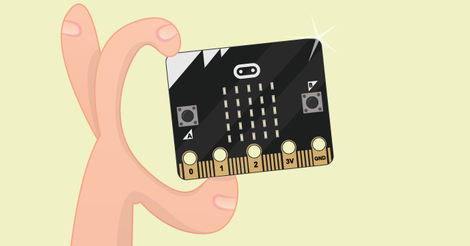
Our educator Ole Andreas Nordhaug travels to schools in Viken and teaches coding to students and teachers. Now he delivers a series of courses that not only use Micro:bit and MakeCode, but also other carefully selected programming platforms. The tools used are free, and can be used on iPad, PC and Chromebook.
The course will run over 4 course days during the coming school year and will, including the assignments to be done between the course days, fulfill Udir's requirement for 40 hours of competence development . The scope of 40 hours makes it possible for the school owner to apply for funds for equipment based on the teachers' course participation. The school owner can apply for grants based on both completed and planned competence development. Read more here.
Registration deadline June 15. Registration is via email to ole.andreas@vitenparken.no.
The course fee per teacher for the entire course series is 5,000,-
Program
Day 1
- Programming in the new curricula.
- The new teacher role in technology-dense classrooms.
- Programming platforms suitable for schools.
- Introduction to Micro:bit. Using sensors and logic with Micro:bit.
Follow-up work: Planning, implementation and evaluation of a simple teaching plan for testing at your own school.
Day 2
- Creative and exploratory programming in 2D and 3D.
- Programming with light, sound and music.
- Wireless communication with Micro:bit.
Follow-up work: Planning, implementation and evaluation of a simple competence-building initiative for colleagues at your own school.
Day 3
- Data collection and logging via sensors.
- Simulation of scientific phenomena.
- Programming of complex systems.
- Didactic approaches in interdisciplinary projects.
Follow-up work: Planning, implementation and evaluation of an interdisciplinary teaching program at your own school where programming is an integrated part.
Day 4
- Experience sharing and reflection.
- Tips and resources for further work.
- Review of specific examples of appropriate use of programming in several subjects.
The course series was developed by Ole Andreas Nordhaug. He worked as a teacher and school principal in primary school before joining Vitenparken Among other things, he leads our super:bit initiative, which takes him out to middle school teachers and students.
Ole Andreas is passionate about nutritionally beneficial courses where play and learning are central.