g

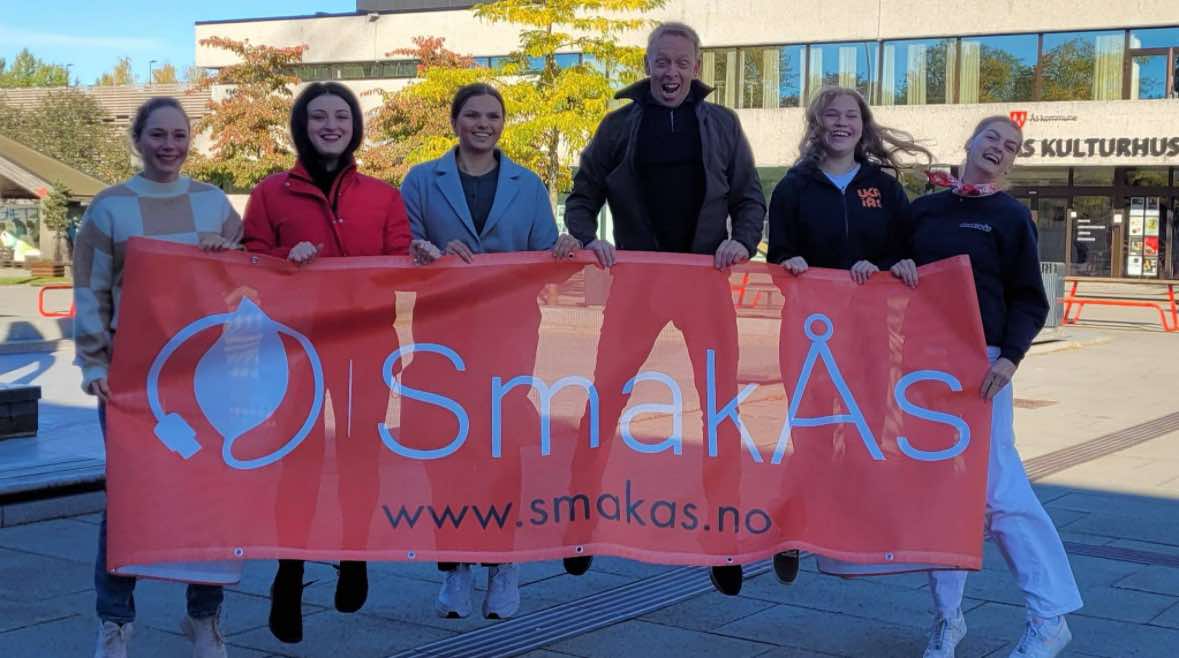
SmakÅs is an annual food and technology festival, organized in collaboration between Vitenparken and Ås municipality (2018 – pdd)

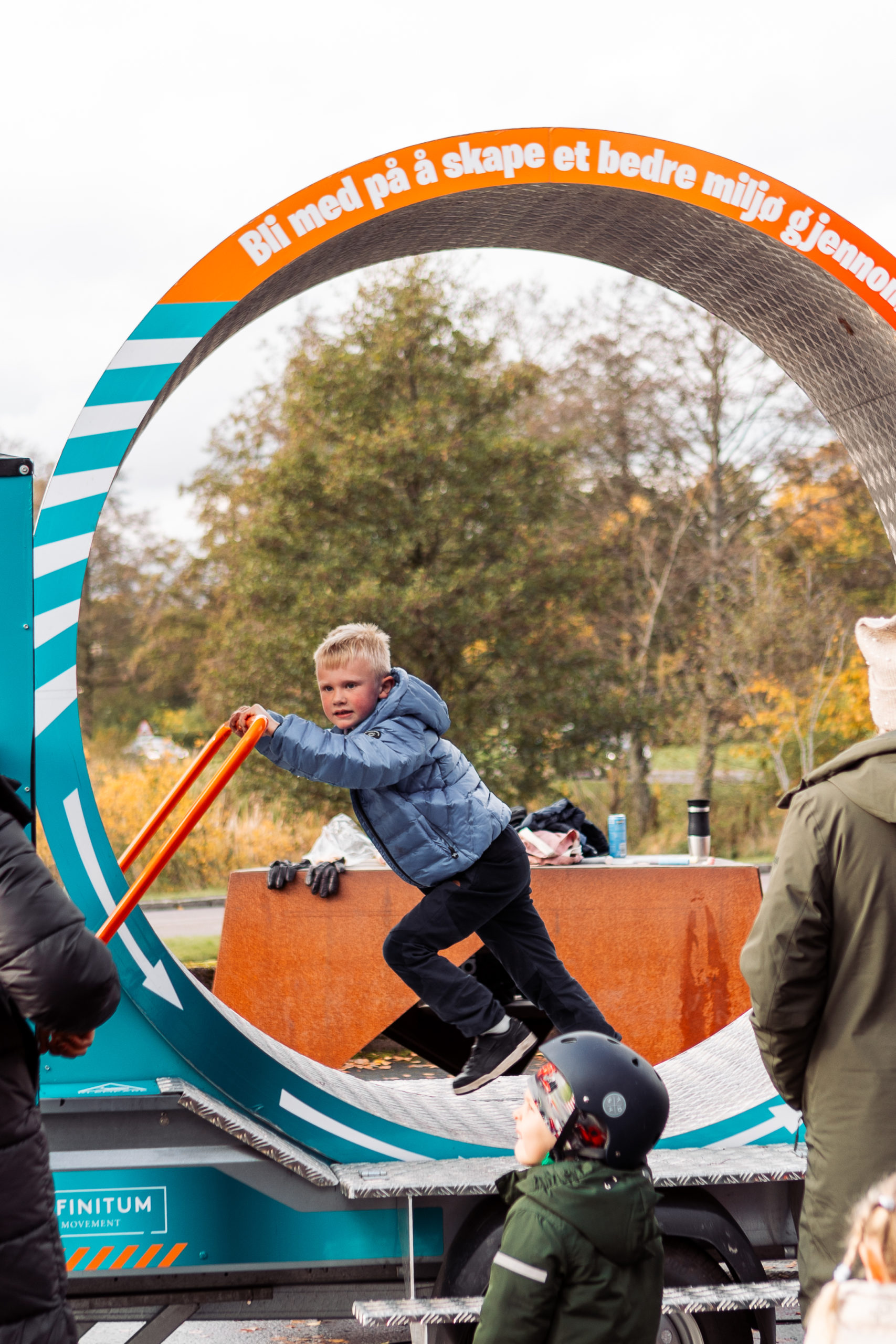
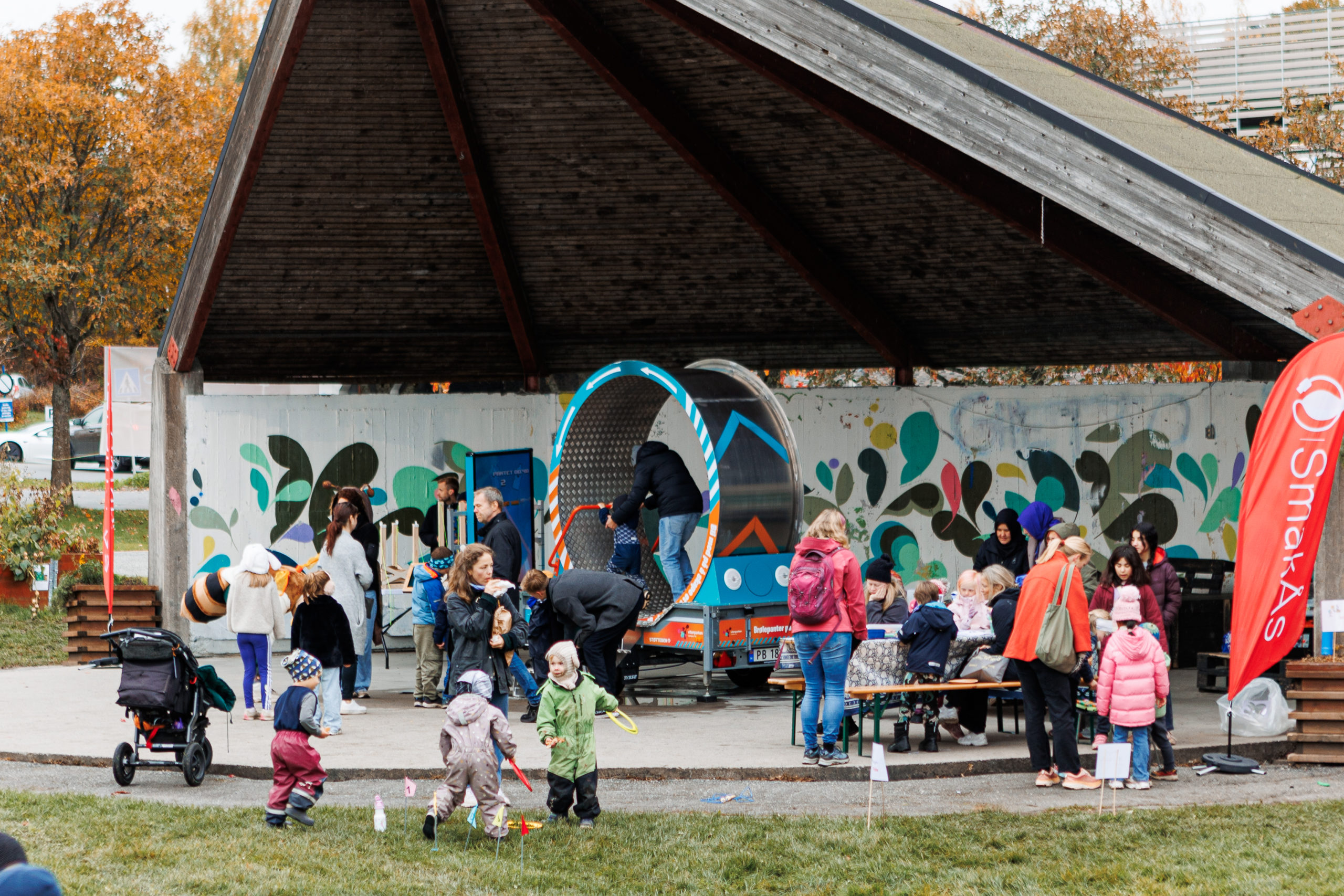
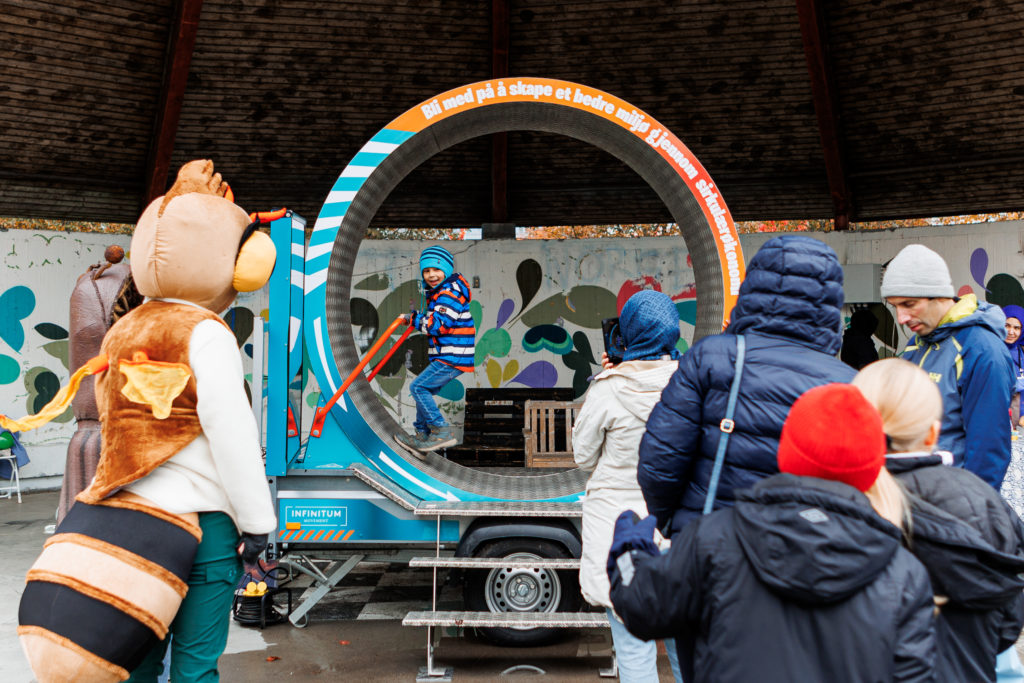
The Science Park's costumed science hosts will be participating in the center of Ås with our own installation, Brøleparten, developed with support from Infinitum. The installation focuses on circularity and pledges.

Vitenparken Campus Ås collaborates annually with Ås municipality on SmakÅs , a two-day food and technology festival. The Science Center is responsible for the free Family Day on Sundays, while Ås municipality coordinates the market day on Saturday.

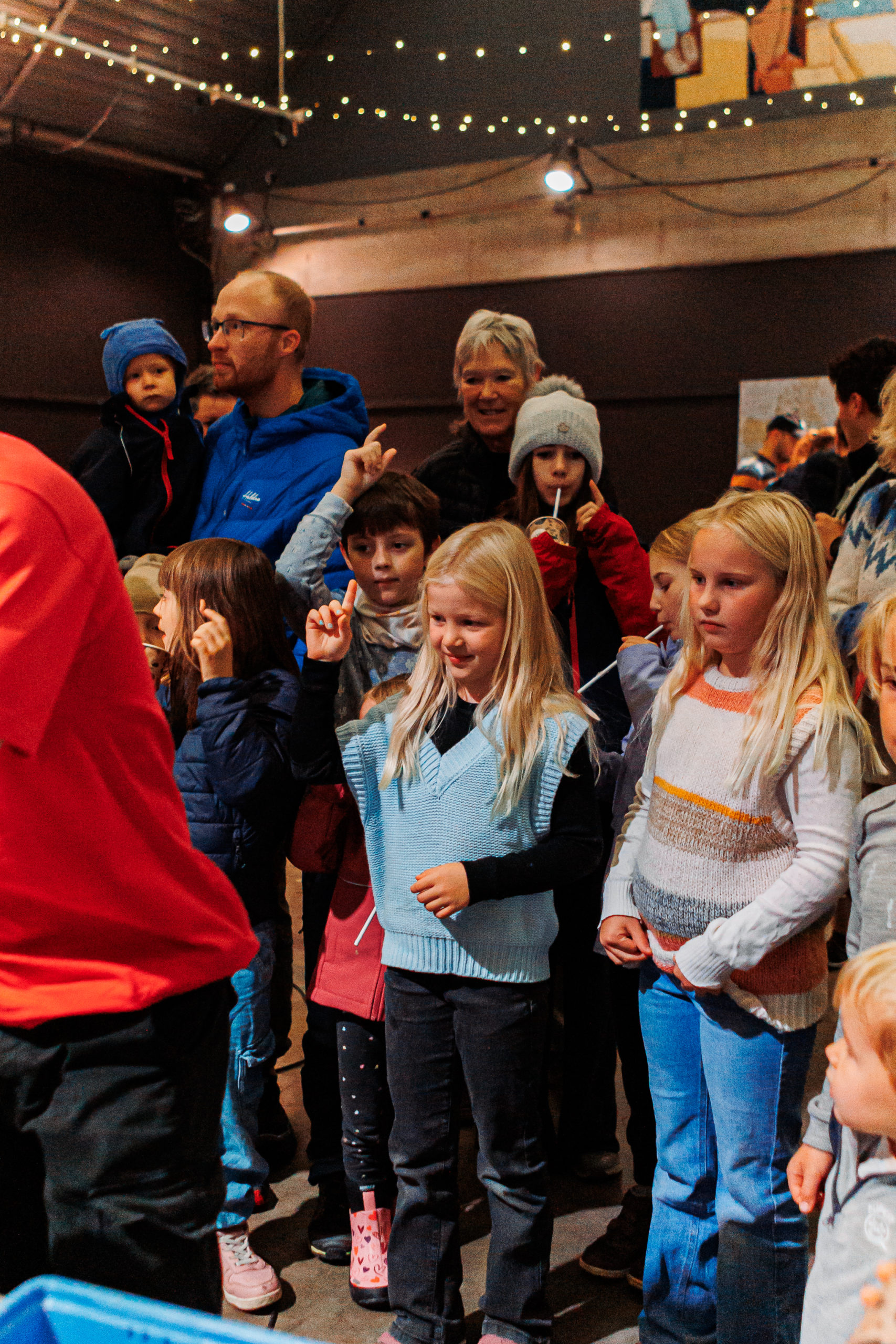
SmakÅs is Norway's only food and technology festival with sustainable development as its main focus. Every autumn we invite young and old from Ås and the surrounding area to the festival at Campus Ås and in the city center. Previously, SmakÅs was a one-day festival divided between Ås city center and Vitenparken ; in 2022 we expanded to more days, with market day on Saturday and Family Day on Vitenparken Sunday. Since 2023, Vitenparken had the main responsibility for the festival's marketing and graphic profile.
As a science center for food and sustainable development, we contribute with a comprehensive outreach program for children and families.

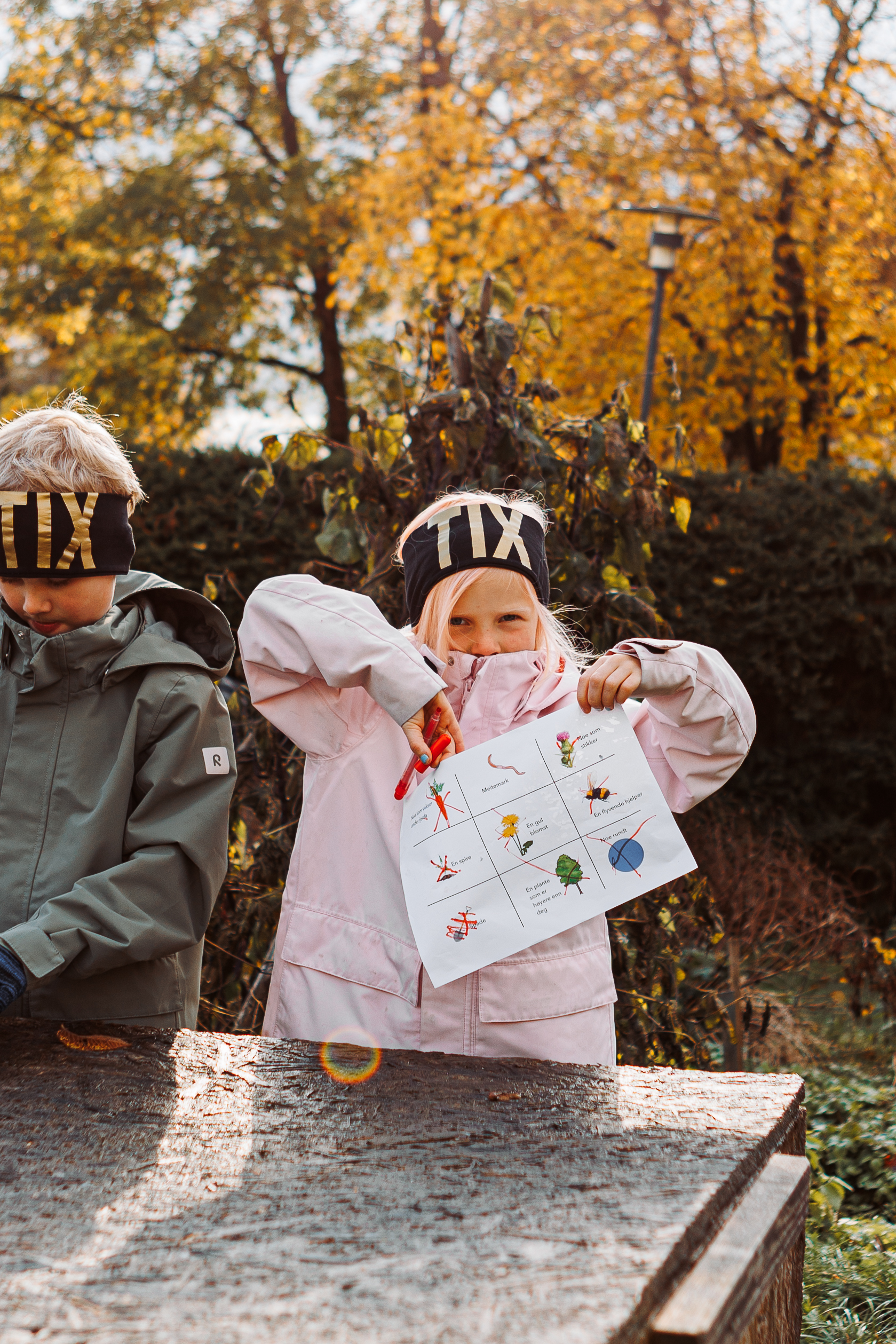
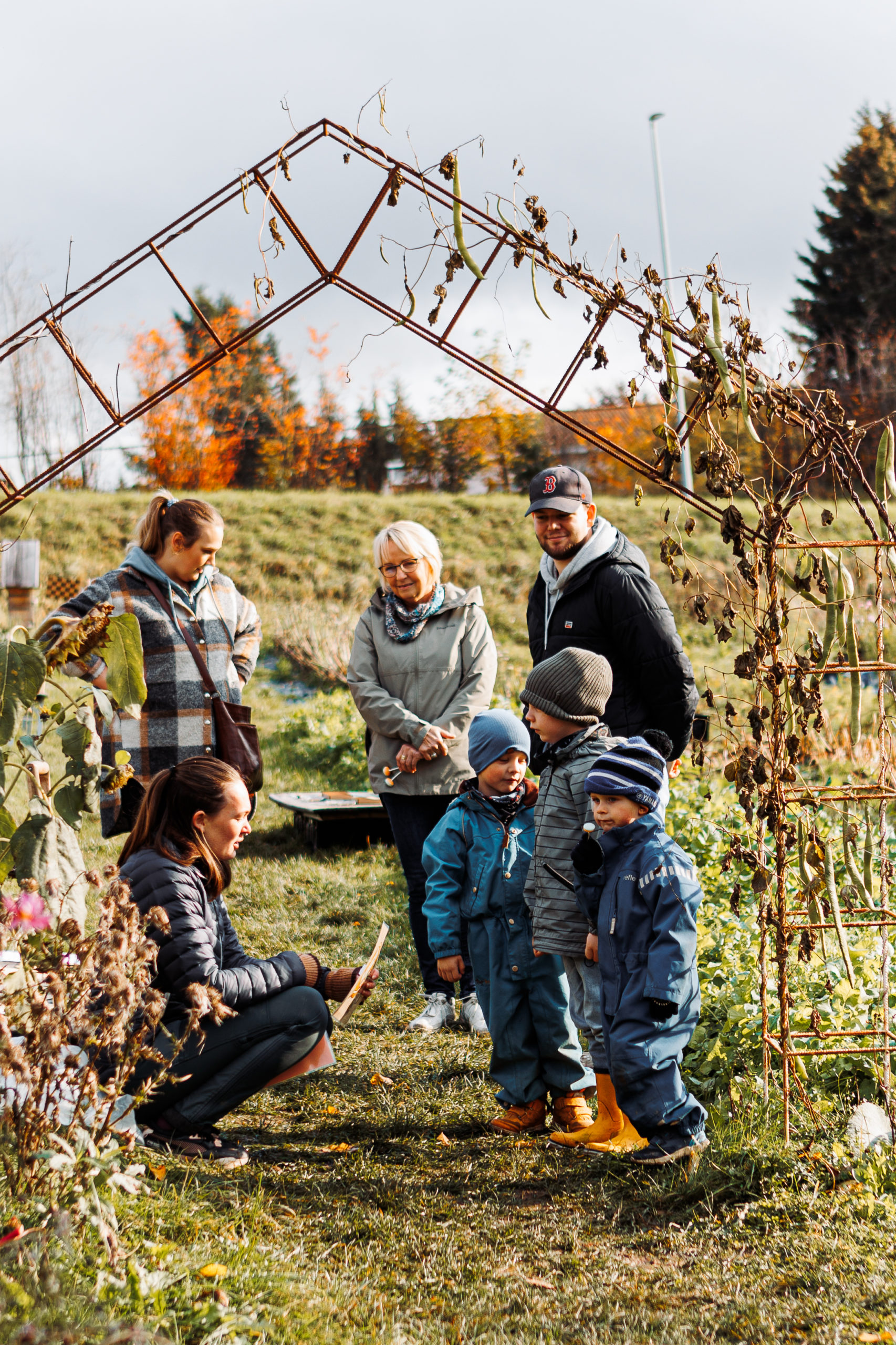
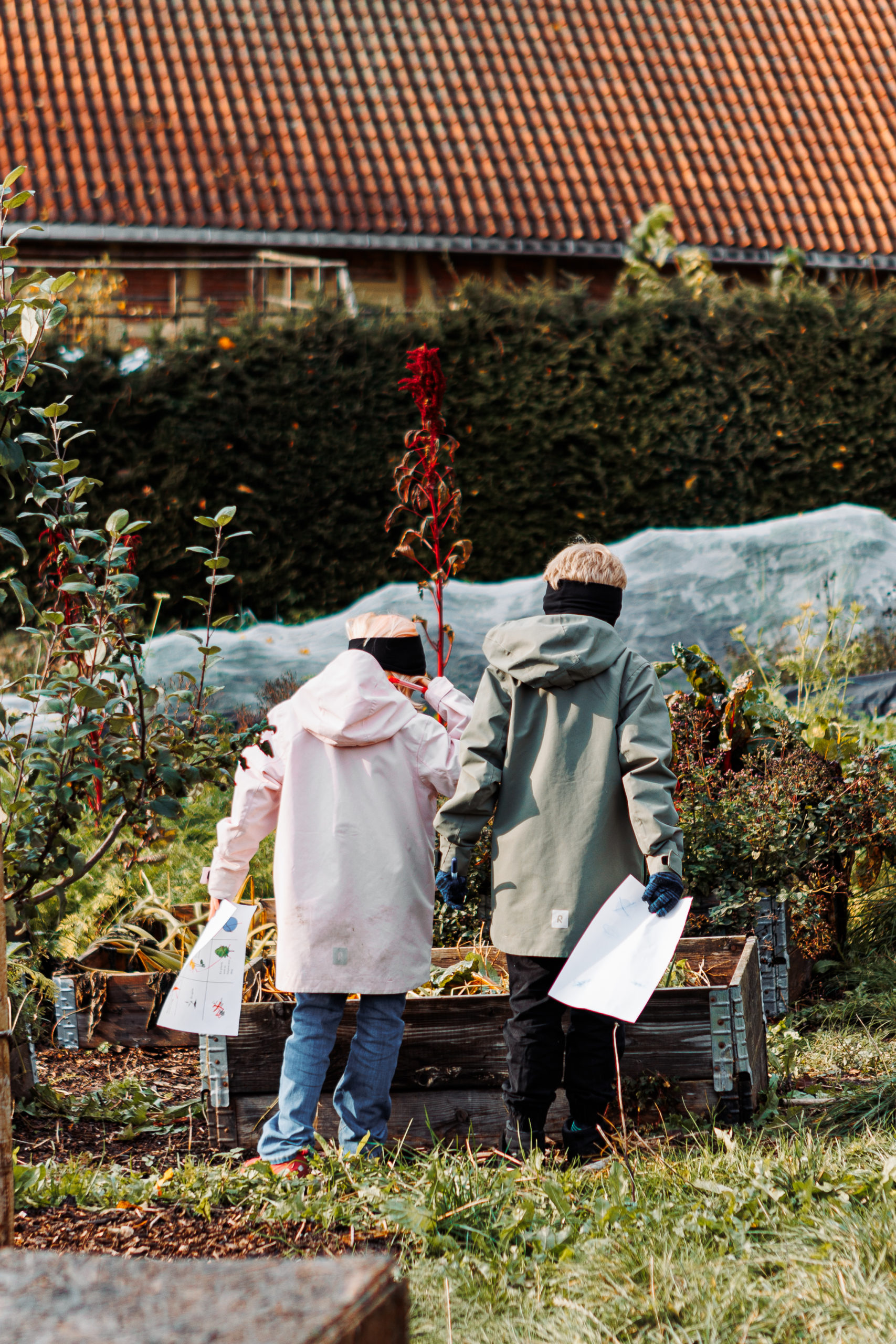
In the school and kitchen garden , VitenEnga, our facilitators – under the main responsibility of Håkon Mella , educator and school garden facilitator – lead practical activities that connect growing, cooking and sustainability. The goal is to use the school garden as an interdisciplinary classroom where children and adults learn about the connection between ecosystems, how food is produced and what food security means – and why this must be protected for future generations.
We also arrange academic events about the history of science and research at Campus Ås, with historical tours and lectures – including about the history of Jarlsberg cheese, developed at NMBU and Norway's most internationally known cheese – as well as current lectures on food and food safety from leading academic circles. Our guides, many with research backgrounds and local roots in Ås and NMBU, take groups through Norway's most beautiful campus, while science hosts lead visitors to Korsmo's weed garden in collaboration with NIBIO to share knowledge about useful plants and "weeds".

Vitenparken houses NOBA – Norwegian BioArt Arena , Norway's first and only arena for bioart. During SmakÅs we have shown films, exhibitions and children's activities that promote the art form and stimulate children's creativity – to awaken new perspectives on nature, the environment and society.
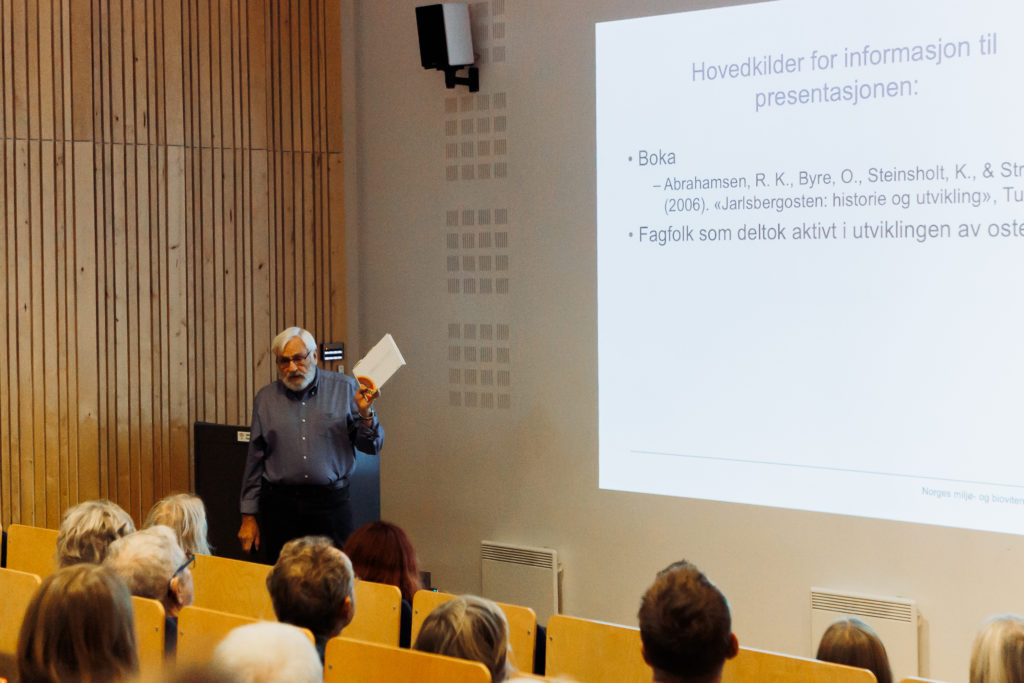
Professor Roger Abrahamsen gives a lecture about Jarlsberg cheese at Family Day 2024

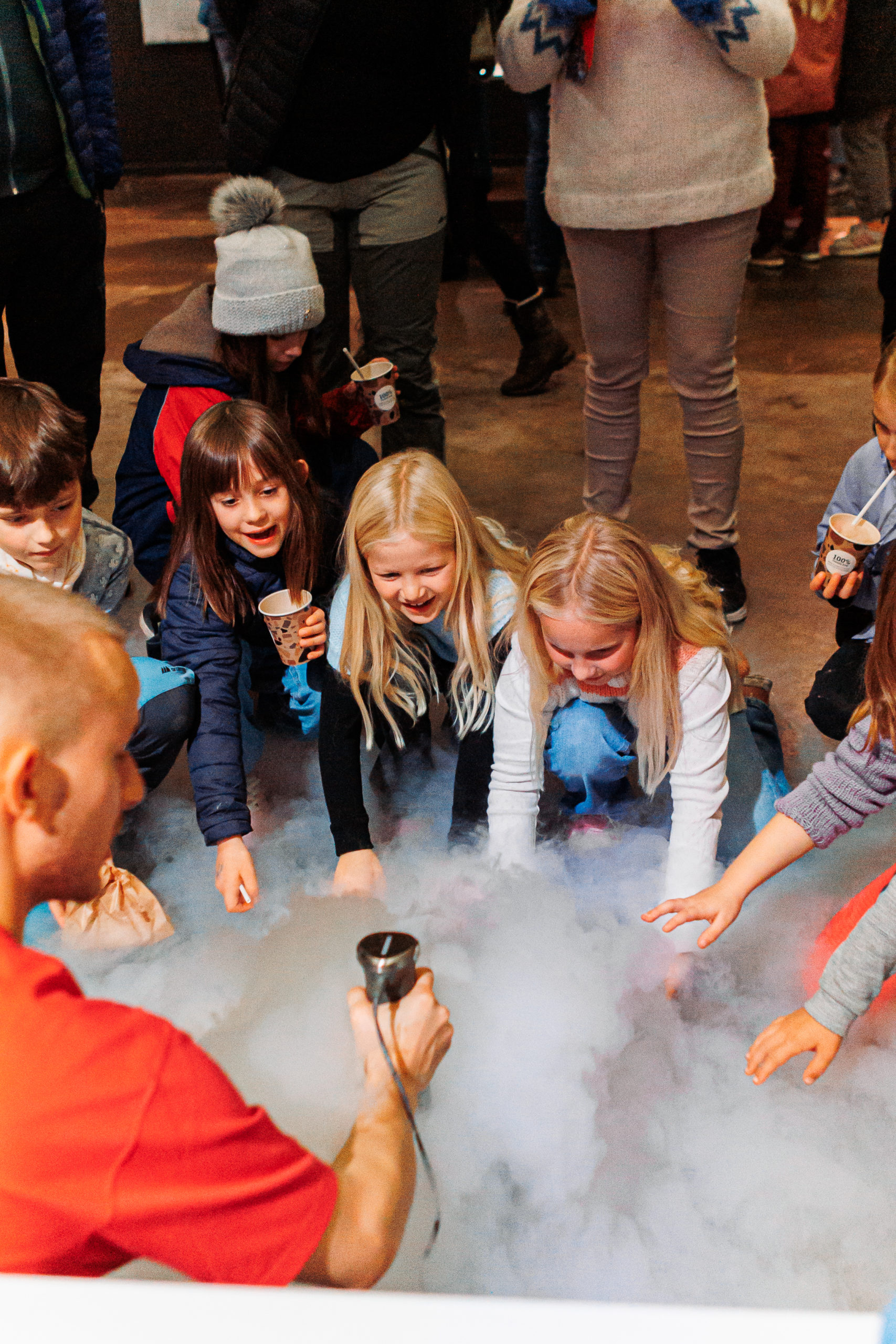
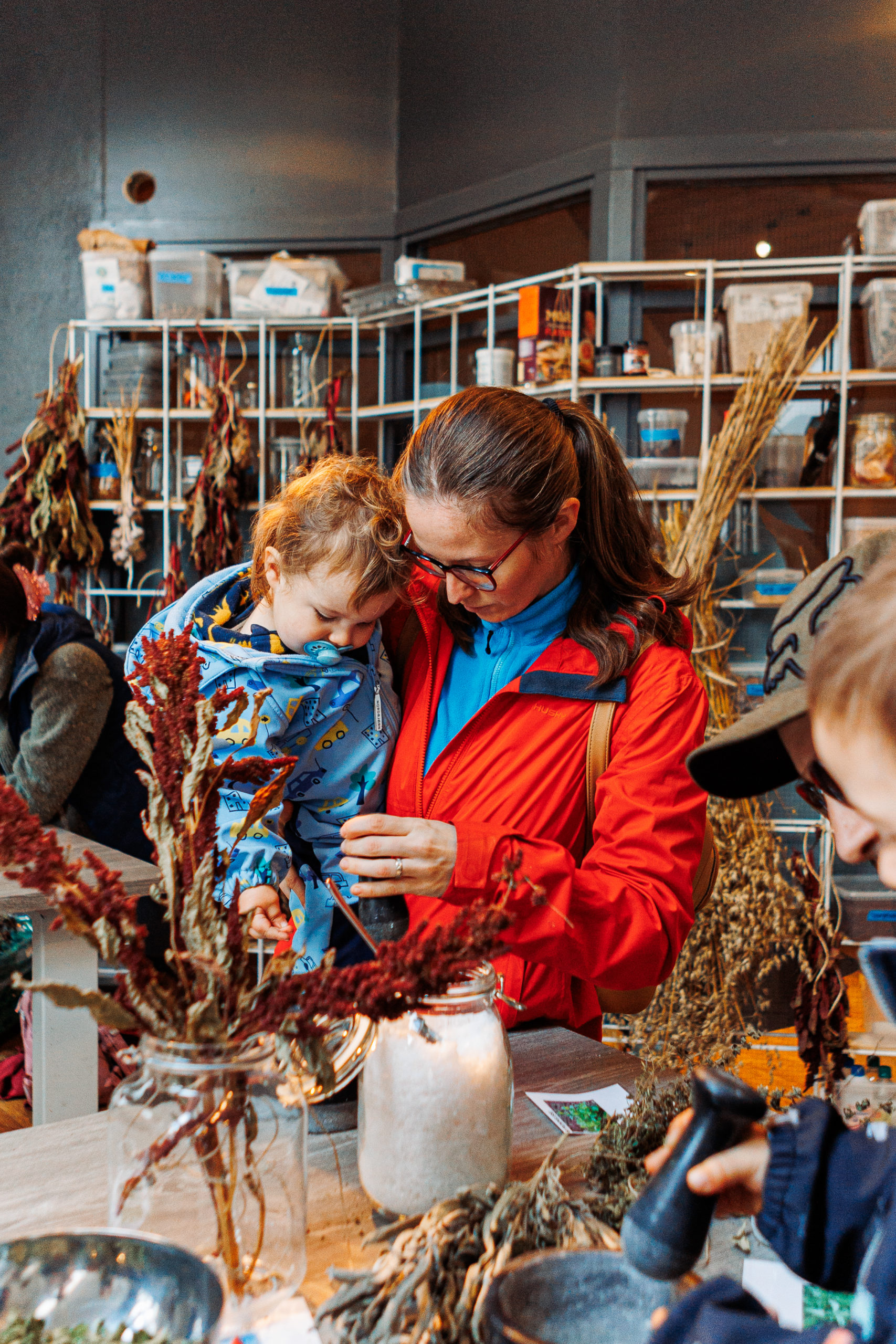
In our MatLab, we explore cooking from both sustainable and technological perspectives. Children can use a pancake robot to design and cook pancakes, and they can make their own salt. Our science hosts make nitrogen ice cream – a crowd favorite while also explaining the chemistry behind it.

The stations offer activities that both taste and explain, such as "make your own slush", used to illustrate physical principles (melting/cold) and link this to climate.

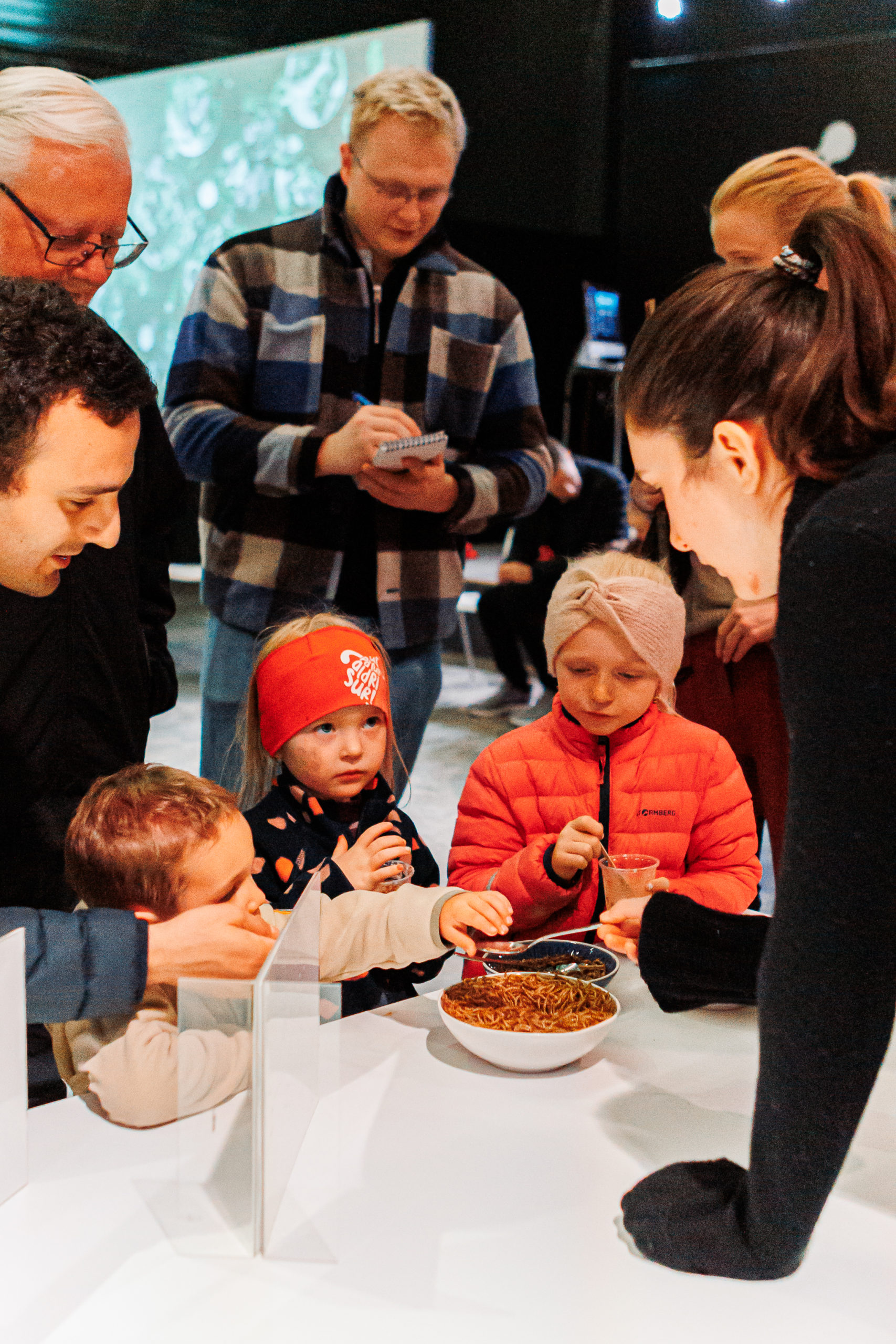
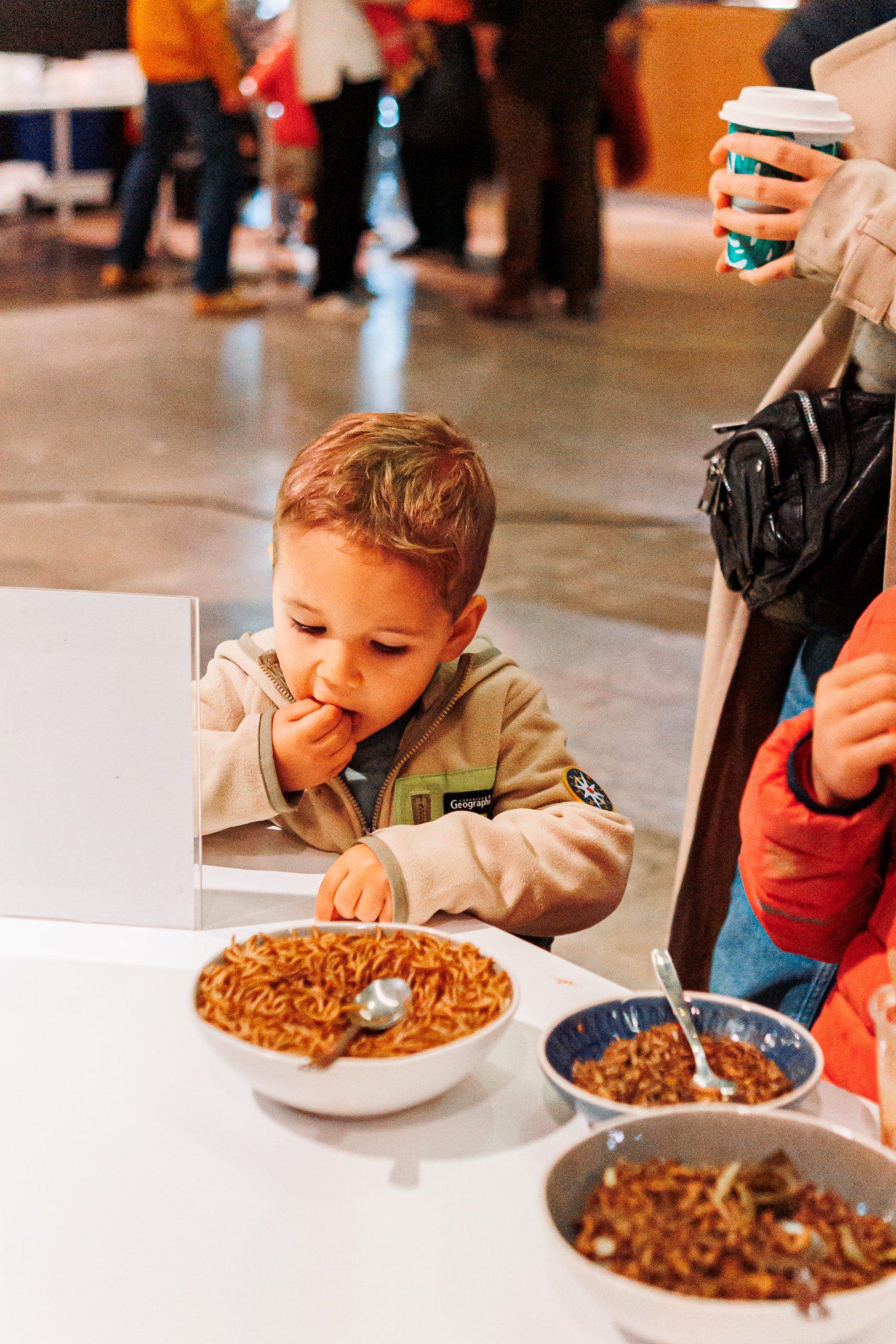
As a science center known for edible insects, we have a station where children and adults can taste – and learn about the climate and nutritional benefits. We also introduce plant-based protein snacks as the food of the future, to teach about sustainable consumption and what the diet of the future could look like.
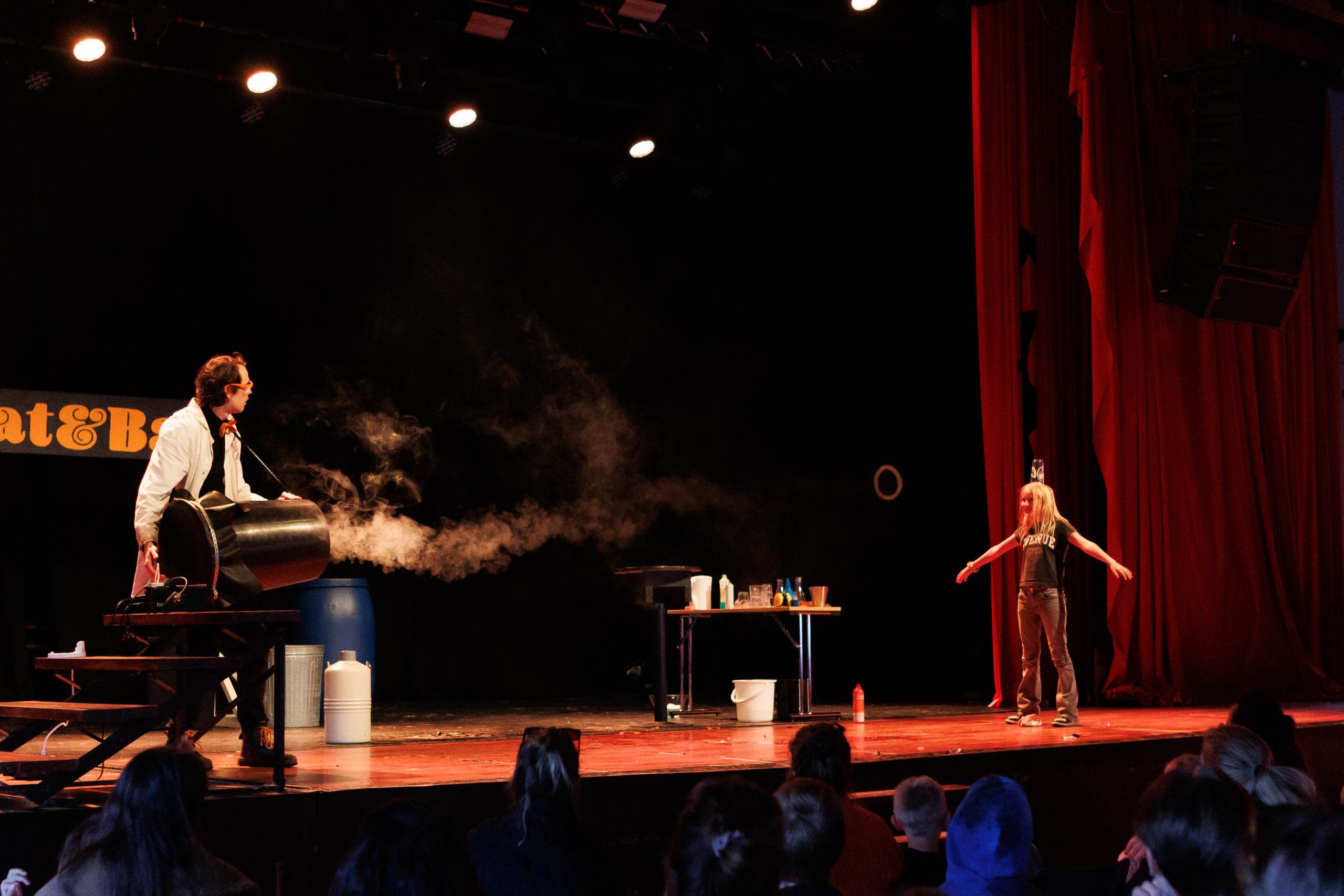
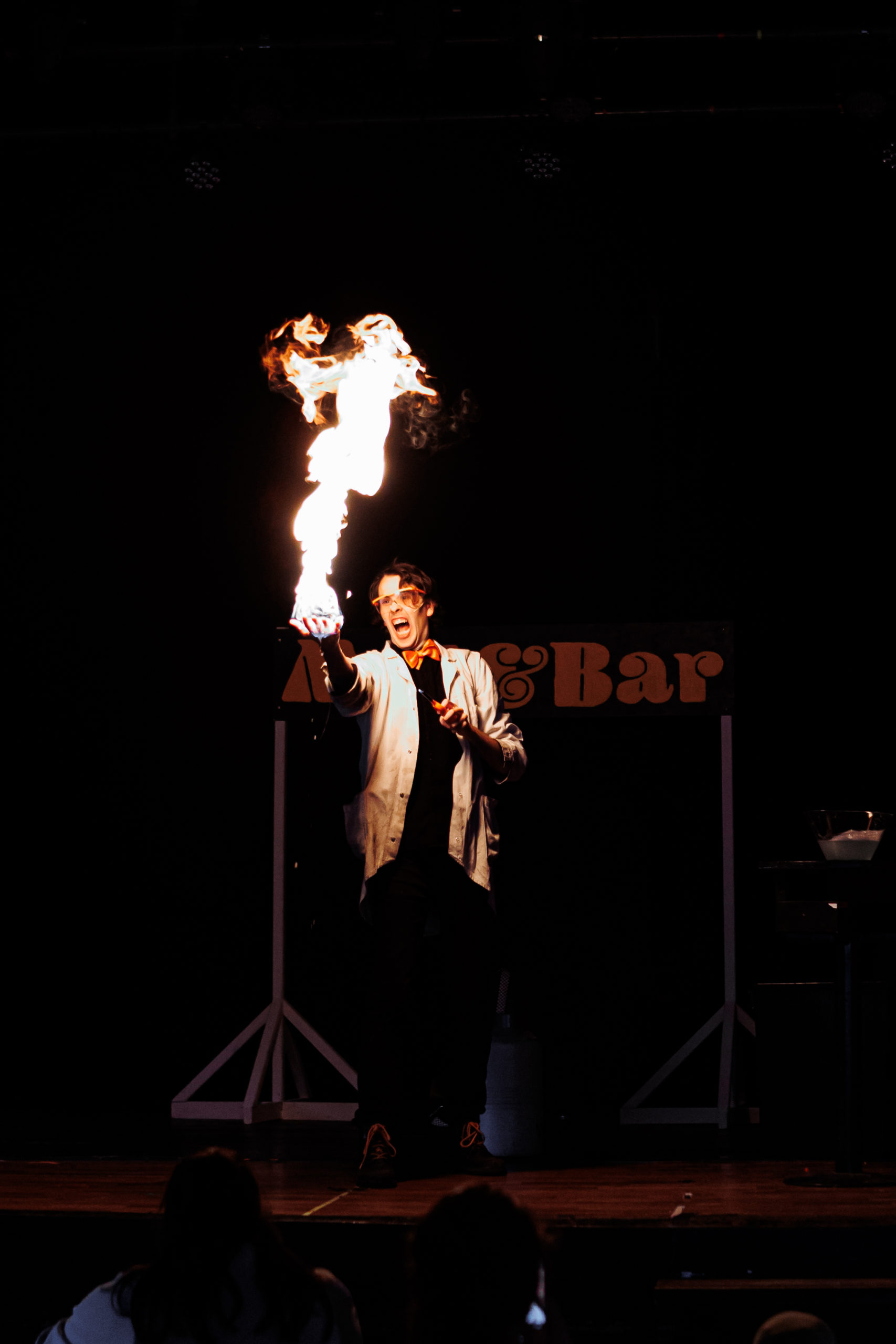
Our presenter Frederic Lindboe engages the audience with science shows that combine humor, energy and learning for both children and adults. In addition, we offer a wide range of coding activities, from Bit:Bot to Sphero, and interactive installations developed in-house through our subsidiary Inspire to Action – most famously the Roaring Panther.
In 2024, nearly 5,000 people visited the festival in Ås over two days. This is probably the biggest and most important event for children in Ås this year. We are proud to offer this free of charge to residents and visitors. The Family Day alone attracts around 2,000 visitors.

Would you like to sponsor Family Day?

Contribute to stronger communication about food and sustainability, and to offer cultural and educational experiences for children and families – regardless of socio-economic background. Contact us at elina@vitenparken.no or marked@vitenparken.no.

Responsible at Vitenparken :


Elina Gobeti
Marketing and Communications Manager
elina@vitenparken.no

Graphic design:
– Raquel Marques
raquel@vitenparken.no
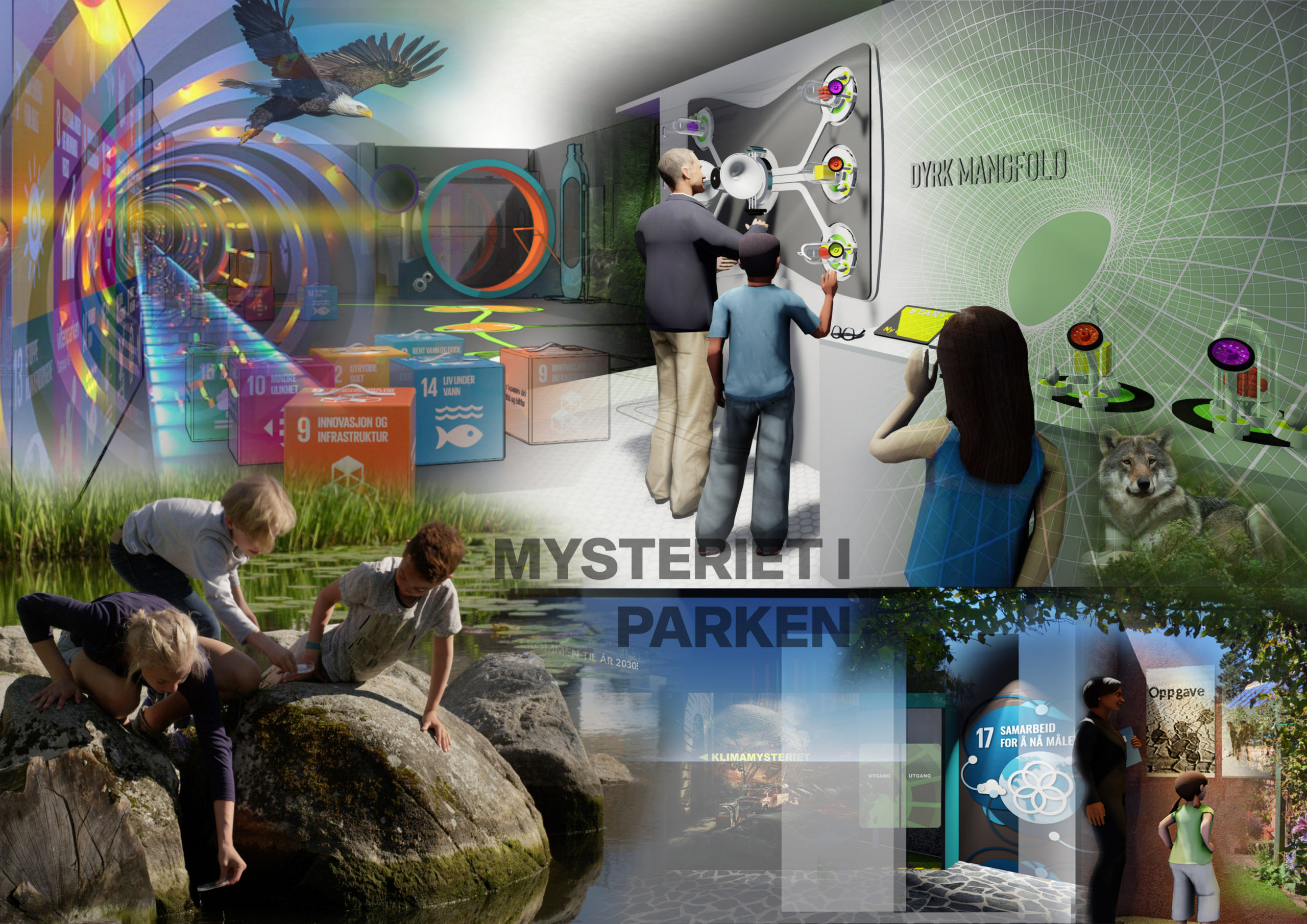
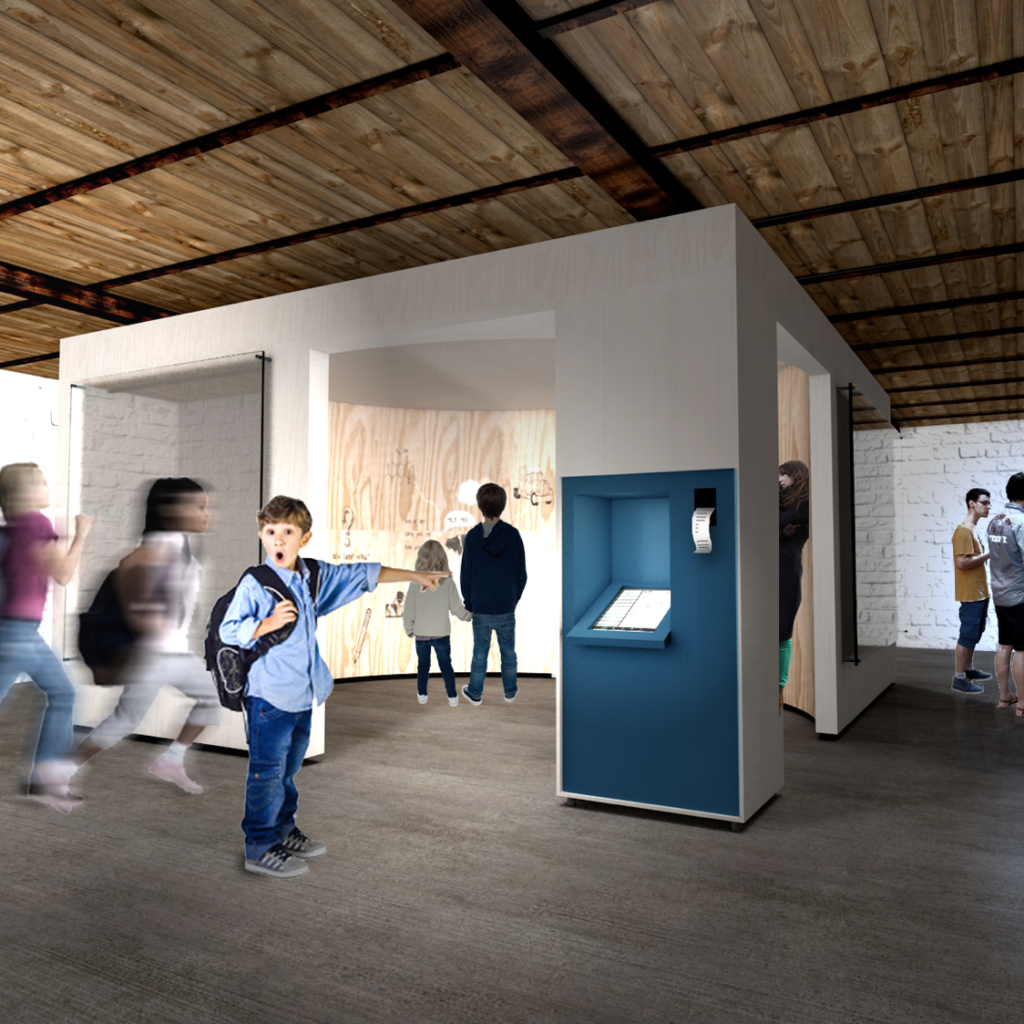
Preserve! – We are building new exhibitions on Vitenparken

The project is generously supported by the DNB Savings Bank Foundation.
We are well underway with the work and the public can experience the first results in early 2025.

In recent years, the UN's Intergovernmental Panel on Climate Change has determined that we are not only facing a climate crisis, but that we are also losing species and areas at a breakneck pace in a parallel and intertwined natural crisis.

In light of this, Vitenparken We have therefore chosen to flag the work on upgrading our exhibition under the banner Biodiversity. By using biodiversity as a narrative device, we will present the challenges brought about by the nature and climate crisis, as well as point out and explore existing and future solutions to these challenges in a vivid and engaging way.

At crossroads
Vitenparken is constantly evolving and we see that our growing audience both wants and needs a broader offering. We strongly believe that knowledge-based and creative work across disciplines and generations breaks down established divisions between nature and culture, and across age groups. An interdisciplinary approach to the development of the exhibition is therefore not only desirable, but important and necessary for our ability to communicate about - and create a sense of ownership for - solutions to the ongoing climate crisis among our visitors.

Open and honest
Since its inception in 2013, the Science Park's mantra for communication has been "Open, honest, positive, research-based and solution-oriented", something we stand by in the upgrade of our communication arenas.
We believe there is a need to radically reconstruct the ways we work, think about, and communicate the themes of sustainability, biodiversity, the climate crisis, and the environment. We need conversations, discussions, reflection, and exchanges of ideas about what we think the environment is, what sustainability is and means for everyone. It is in the encounter between human and other life forms that experiences, learning processes, and activities emerge.

Outside and inside
Our exhibition differs from other comparable players' exhibitions in that it not only consists of an indoor exhibition, but also a 2400m2 kitchen garden, access to NMBU's beautiful park, classrooms, and our digital spaces. Connecting all these exhibition areas and communication arenas into a whole, gives us a vibrant, dynamic and innovative space to conduct modern science communication that creates engagement.


Art as a storytelling tool
Materials and nature are not necessarily props that need “help” from human forces, they instead consist of their own forces with tendencies and room for action. In the interdisciplinary work with art and science, we want to investigate how we as humans respond in the encounter with the materials around us and how we continuously influence and are influenced by living beings and living places. Here, our art department NOBA will play a central role.

7 theme sections
The choice of biodiversity as the guiding star through the development of the new strategy for our exhibitions is rooted in the climate and nature crisis we humans are in the midst of. The exhibition will consist of seven thematic sections: The Tree, The Table, The Sea, The Animal, The Body, Climate and Earth.

Project group:
Elise Matilde Malik – project manager
Ole Andreas Nordhaug – educator and communicator
Rebekka Sæter – artist and communicator
Eli Skatvedt – head of Norwegian BioArt Arena – NOBA
Herman Tandberg – Exhibition Designer / Oglenoor
Skjalg Molvær – Technical Inventor / Inspire to Action

Contact:
Solveig Arnesen, CEO at Vitenparken
solveig@vitenparken.no
Elise Matilde Malik, communications advisor
elise@vitneparken.no

Jordsans – The Science Park's first industrial PhD by Elise Matilde Malik (2023–2026)

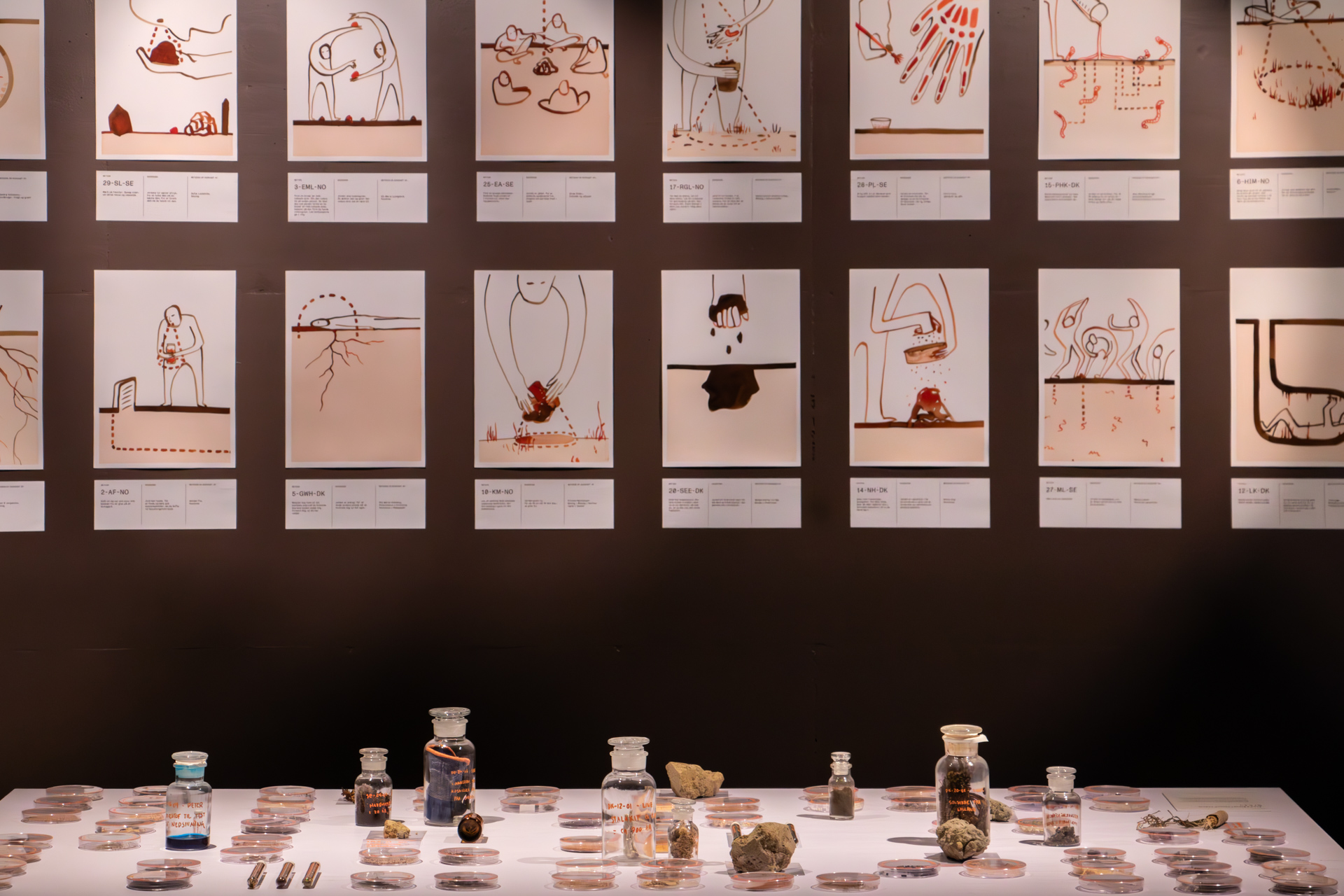
The doctoral project Jordsans is the Science Park's first industrial PhD (2023-2026). The project will involve employees at Vitenparken , Elise Matilde Malik, explore different ways of conveying topsoil through Vitenparken exhibitions. The doctorate is a collaboration with the Centre for Museum Studies and the research community associated with Environmental Humanities at the Faculty of Humanities, University of Oslo.

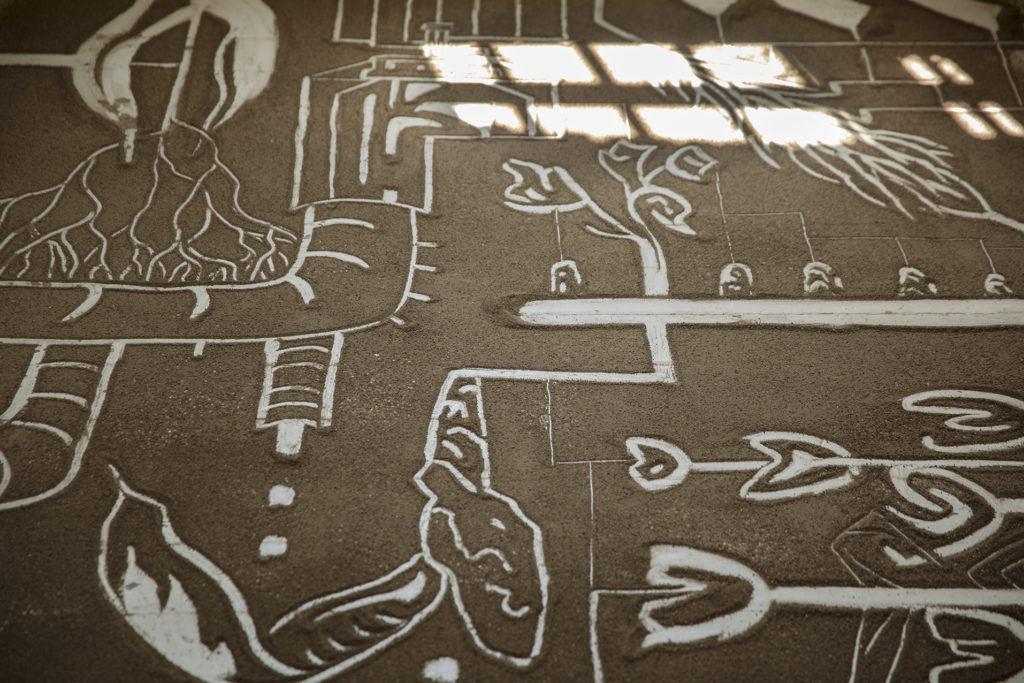
Detail from Maria Viftrup and Jordens hus's exhibition Jordsans at Norwegian Bio Art Arena on Vitenparken , autumn 2024. Photo: Maria Viftrup.

Multi-sensory curation of topsoil in Science Park's exhibitions

We humans have radically changed the Earth's ecosystems and agriculture, like other nature-based activities, has accelerated the Anthropocene era in which we now find ourselves. Humanistic research on the environment and climate, like natural science research, has the potential to function proactively and contribute to problem solutions. With this project we want to build a bridge between environmental humanities and museology at IKOS, UiO, and Vitenparken Campus Ås, a knowledge and experience center for food, environment and climate. 

The project's goals are twofold; 1) explore the Science Park's research dissemination and exhibitions about topsoil through action research based on environmental humanistic perspectives and sensory museology and 2) propose solutions for how to elevate the dissemination of topsoil through multisensory exhibitions and experiences. 

As an important part of the project, we take as our starting point the statement “…we consider exhibitions as knowledge-in-the-making rather than platforms for disseminating already-established insights.” from the book Exhibitions as research (Bjerregaard 2020). The project will therefore explore the concept of “exhibition as research” and result in an exhibition, in addition to publications . This exhibition will then be part of the larger bioart exhibition Experience Soils; humus, humans, hope, which is planned to be curated by the Norwegian BioArt Arena (NOBA at Vitenparken ) in 2025 as part of the research project Anthropogenic Soils (led by U. Münster at UiO). 

Detail from artwork by Maria Viftrup in the exhibition Rod/System, curated by Jordens Hus. Photo: Tine Bek.

Will "sense wash" the Science Park's exhibitions

In Norway, we spend one and a half billion of tax money on museums and science centers annually, but there is little research in sensory museology on how installations and artworks work on the audience. It is therefore relevant to ask; how do multisensory design elements affect the experience and how can narratives experienced through the senses affect the exhibition experience to ensure that the message of the exhibition and installations reaches the audience? (Hauan and Kolstø, Exhibitions as learning environments: a review of empirical research on students' science learning at Natural History Museums, Science Museums and Science Centres.)

Agriculture, the use of land, is the science, art and practice of cultivating the plants and animals that we will eat. A vital and worldwide food chain that has intertwined nature, culture and technology since the beginning of agriculture. What has shaped our surroundings more radically than agriculture? Yet food production, and not least topsoil, is experienced as an abstract concept by many. Research into plant production, livestock and soil as well. Science and experience centers, such as Vitenparken Campus Ås has taken on the task of raising the general public's understanding of topics such as food, the environment and climate. What steps can be taken to raise the public's experience and understanding of topsoil? The dissemination and communication of food and agricultural research in science centers should be "sensorially cleansed" to restore a stronger bond between people and food.

Detail from Marika Seidler's artwork in the exhibition Jord/Liv, curated by Jordens Hus. Photo: Benita Marcusen.

More information

Contact:
Elise Matilde Malik
elise@vitenparken.no

Instagram:
@meitemark1

Supervisors:

Brita Brenna
Professor of Museology
IKOS UiO

Hugo Reinert
Associate Professor in Environmental Humanities
IKOS UiO

Alexander R. Toland
Professor of Arts and Research
Director and Speaker, Ph.D. Program in Art & Design
Bauhaus University Weimar

Download the full project description .

ClimateFoodTable

Welcome to the table! Around this dinner table you will learn more about how you can make sustainable food choices. Imagine that you are sitting around a dinner table and can choose between an organic tomato from Viken or an imported tomato from a sunny country, and at the same time get the answer to which tomato is the most sustainable choice. You will have the opportunity to do this at KlimaMatBordet.

The Climate Food Table is an interactive installation that explores the connection between food, meals and climate. Welcome to the table!

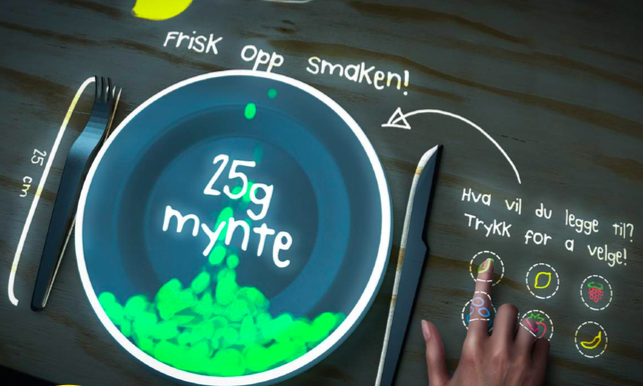
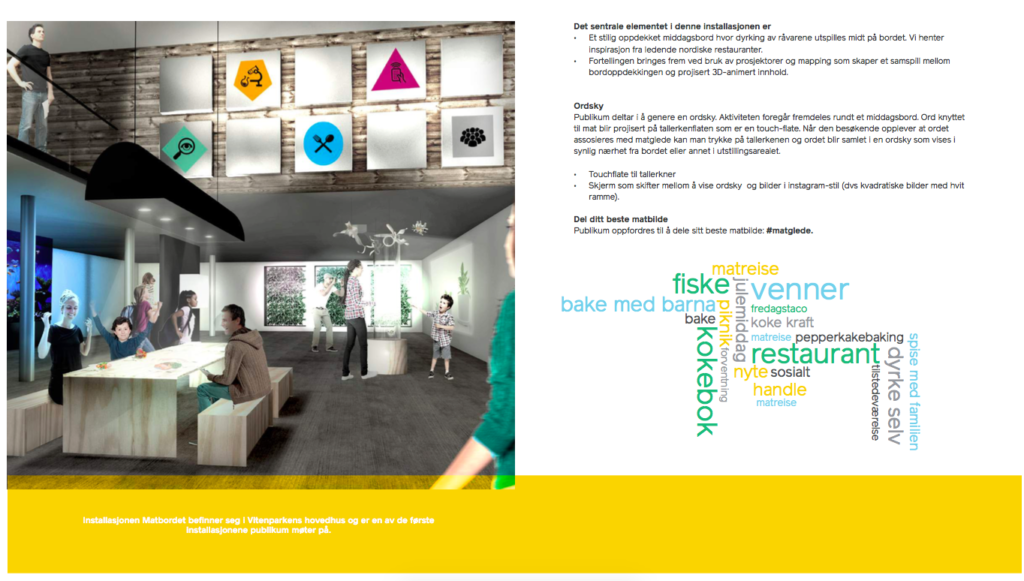
The KlimaMatBordet is an interactive installation where the audience sits around a dinner table. This is a familiar setting for most of us, which reinforces the experience that we are now setting ourselves to relate to food. In the middle of the table, various edible varieties are grown that you can choose as an ingredient for your dinner. We have set the table for a meal, and on the plates a variety of dishes are prepared by a playful and entertaining little, animated chef. This experience is created using projection mapping and 3D animated content. A sound shower creates a separate soundscape for those sitting at the table and contains sounds we associate with meals, cooking and the joy of eating. An odor shower contributes to a holistic sensory impression.

Often people think that the answers are obvious. Short-distance, organic must be the most sustainable? This installation shows that the answer to the question of what is most climate-friendly, and therefore sustainable, rarely has a simple answer. Today it may be more sustainable to import tomatoes from sunny countries than to grow them in energy-intensive greenhouses in Norway, but perhaps the answer will be different in the future if the greenhouses are powered by energy from solar cells, and receive CO2 from nearby industry as nutrition for the plants?

Using a combination of graphics, projection and pressure-sensitive surfaces, this installation will explore dilemmas related to choices made in the value chain that affect climate change. It helps the audience understand the consequences of choices made by the consumer, merchant, industrial leader, distributor or farmer. Through the installation, the audience gets a sense of how things are connected in a complex system and how climate research is an important part of the picture. Looking at one factor in isolation, there may be an answer, for example, that there are high emissions related to meat production. If you look at it in connection with other factors, such as “CO2-negative” algae production that can be used for livestock feed, the answer may be that algae production + livestock farming = CO2-neutral food production.

What should we do to implement the green shift and solve the climate crisis? Should we stop eating meat or focus on algae production? The Norwegian value chain related to food is affected by global factors. We import large quantities of vegetables, fruit, berries and processed food, as well as input factors at various levels in the value chain. The installation includes real-time data, for example, global commodity prices, exchange rates, CO2 emissions and other climate and environmental data so that we can get a bigger picture of which factors affect the value chain. For the audience, this reinforces the experience that the installation is largely connected to reality. In reality, it takes a long time before you see the consequences of the choices you make, and as a consumer you never get a direct relationship to the consequences of your choices as a customer in the store, and choices that are made throughout the value chain. This installation brings the consequences of choices down to a visual and understandable level. With the help of technology, you can make connections visible in an instant that would otherwise take months and years to see the results. The installation must strike a good balance between the big picture and the choices the audience can identify with. What is the difference in environmental footprint if I buy an avocado from Peru or a squash from a cooperative farm for my Friday tacos? In the store, it is almost impossible to educate yourself about the consequences of such a choice and make informed choices about sustainability.

Background to the project
The background for the project is the three partners' joint commitment to research communication: Østfold Research, the Norwegian Institute for Bioeconomy (hereinafter NIBIO) and Vitenparken Campus Ås are three serious players within different parts of the research and communication axis. All three have a social mission that means that sustainable solutions for the future should not only be researched, but should also be communicated to the general public, preferably with targeted and adapted communication to different target groups in society. When Østfold Research, NIBIO and Vitenparken are now working together on a project, it is with our common professional area of ​​interest that lies at the intersection of food and agricultural and climate research. Another important background for the project is that all three organizations recognize and work to overcome the public's psychological barriers to necessary climate action.

If you would like to know more about the project, please contact elise@vitenparken.no

The exhibition Alien Future

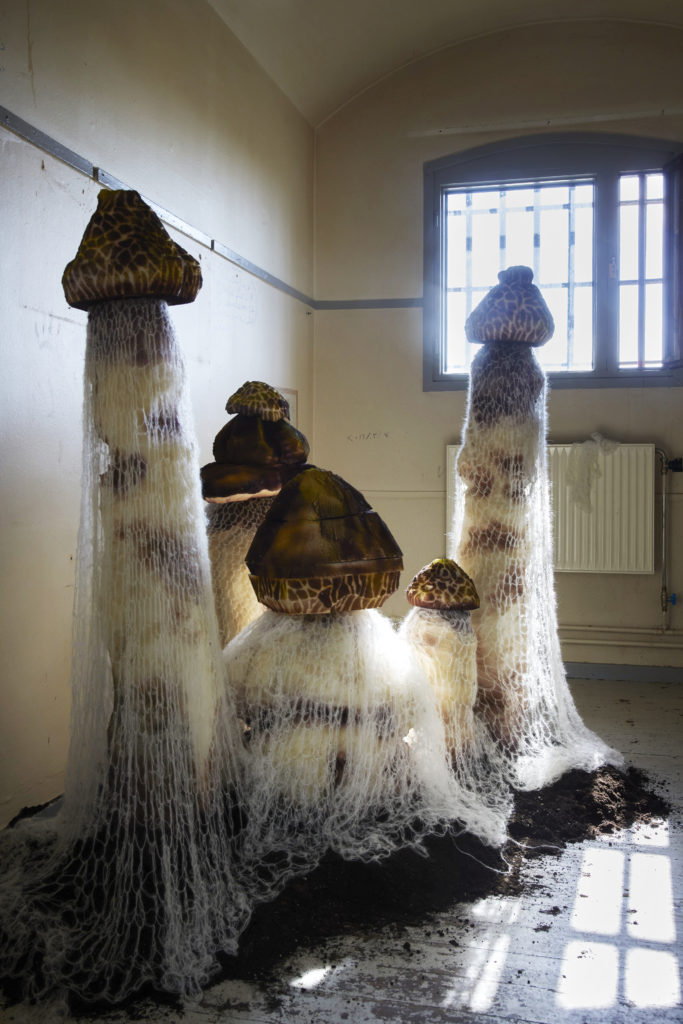
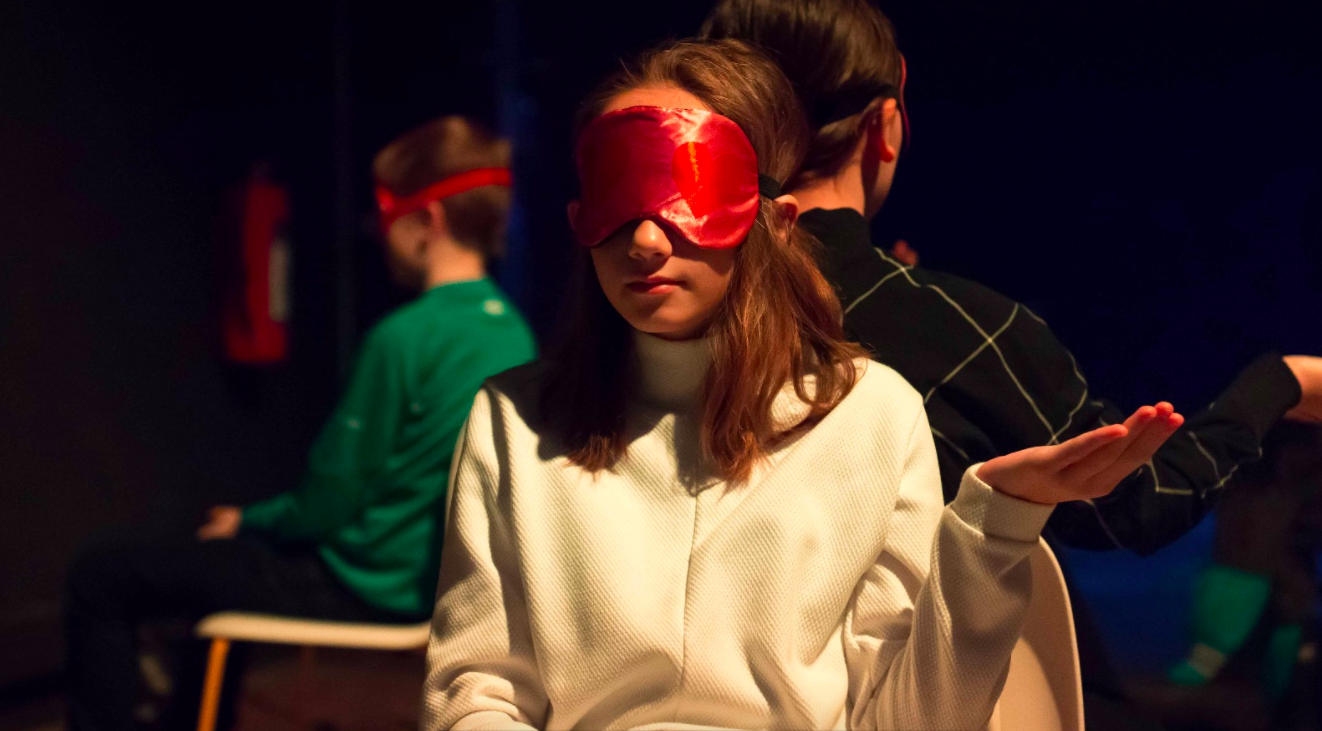
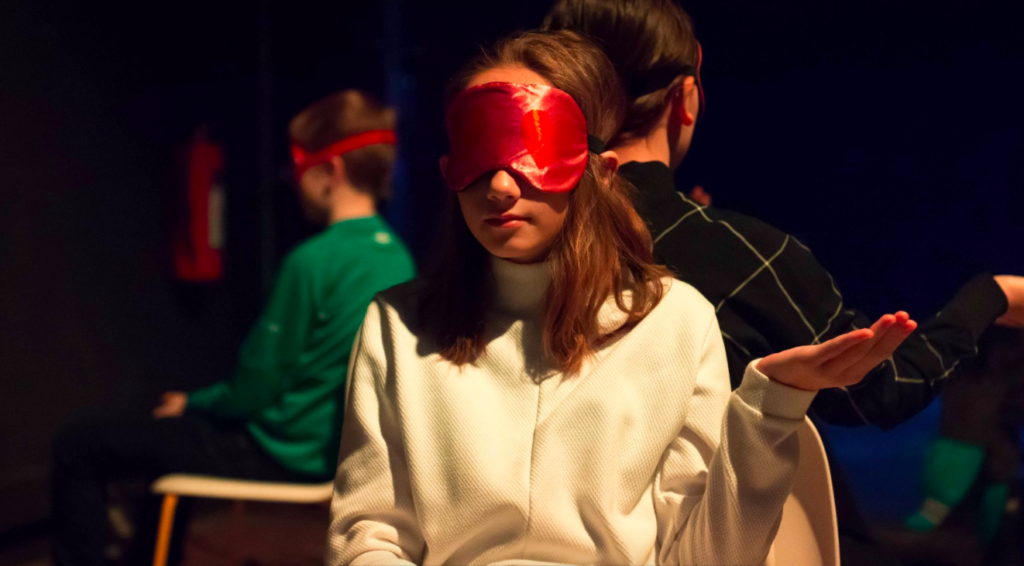
The exhibition “Alien Future – Creating in Strange Habitats” consists of the works “cocreat:e:ures” by Annike Flo and “Entangled in the Mesh” by Anne Cecilie Lie.

In their master productions, Anne Cecilie Lie and Annike Flo examine creating and surviving in our current geological epoch proposed as the Anthropocene; "The Human Stage."

Based on scenography as an extended concept, we address other and extended time perspectives, such as life cycles, geological ages and speculative futures. -Annike Flo, master's student at the Academy of Performing Arts/Østfold University College.

Through multi-sensory experiences, Lie and Flo seek to put the human-centric out of play by introducing us to other strange worlds that are intertwined with ours and make it possible for us to exist.

By working with ecosystems and sonic landscapes that are not always easily accessible, both physically and aurally, we reveal the complexity and strangeness of a world that is often invisible and unheard. – Anne Cecilie Lie, master's student at the Academy of Performing Arts/Østfold University College.

Newfangled Futures, or Fremmedartet Fremtid, consists of two works created by scenography students at the Academy of Performing Arts/Østfold University College.

Collaboration with Vitenparken and the Norwegian University of Life Sciences

The works are based on both Vitenparken and NMBU as knowledge producers and the surrounding landscape. In these worlds, Lie and Flo wander in the divide between the speculative practices of art and science.

Newfangled Futures, or Fremmedartet Fremtid, consists of two works created by scenography students at the Academy of Performing Arts/Østfold University College.

About the artists

Annike Flo (b.1986) is a master's student in scenography at the Academy of Performing Arts, Østfold University College and cocreat : e : ure is her graduation work. In her scenographic work, Annike investigates what it means to create in the Anthropocene era, and is concerned with themes such as "otherness", nature vs. culture and our relationship with other creatures. Annike has a BA in costume for performance at the London College of Fashion, University of the Arts, London. As a costume and set designer in London, she specialized in immersive theater (Secret Cinema, Punch Drunk, Immersive cult, among others), something she has taken with her into her work as a scenographer.

Anne Cecilie Lie (b. 1983) is a master's student in scenography at the Academy of Performing Arts, Østfold University College. She has a bachelor's degree in art from Trondheim Art Academy. Through her scenographic and artistic work, Lie explores societal and built structures, points out blind spots and explores new possibilities for coexistence using, among other things, sound, performance, installations and text.

Follow the Facebook page of the art project Fremmedartet Fremtid/NewfangledFutures .

Do you have any questions about the project? Send an email to elise@vitenparken.no. 

Food for less

We at Vitenparken is working on the development of the exhibition “Food for Less”. Here, the public will be able to explore dilemmas related to sustainable food production in an interactive and fun way.

Make good food choices

Today it may be more sustainable to import tomatoes from sunny countries than to grow them in energy-intensive greenhouses in Norway, but perhaps the answer will be different in the future if the greenhouses are powered by energy from solar cells, and receive CO2 from nearby industry as nutrition for the plants?

Read more about the exhibition Food for Less .

The project is supported by the DNB Savings Bank Foundation.

Do you want to know more?
The contact person for this project is:

Solveig Arnesen
Communications Manager
solveig@vitenparken.no

Are you interested in food production?
Find the latest research in the research database Kore.
Visit kore.no.

Xenophilia

Xenophobia is an art project about xenophobia. The word, which is Greek, means translated into Norwegian “phobia of that which is foreign”. The Xenophobia project was initiated and is currently led by the Cultural School in Ås, in collaboration with Åsgård School, Vitenparken and the municipality of Galatsi in Athens. 

Photo: Knut Werner Lindeberg Alsén

Away with the fear

The purpose of the project is to contribute to increased awareness and reduction of fear of what is foreign and different through long-term, interdisciplinary collaboration. This first project concludes with the performance “Xenophobia” which will be staged in Vitenparken and the Cultural Center in Ås.

Every Thursday during the winter of 2018, the teachers at Vitenparken welcome a great group of students who are in the 7th grade at Åsgård School. So far, they have explored the unknown in several different ways. They have felt the discomfort of exploring what you don't know what is or what you already know, but they have also played and had fun in the face of the unknown.

Read more at: www.xenophilia.no

Se inn i det usynlige

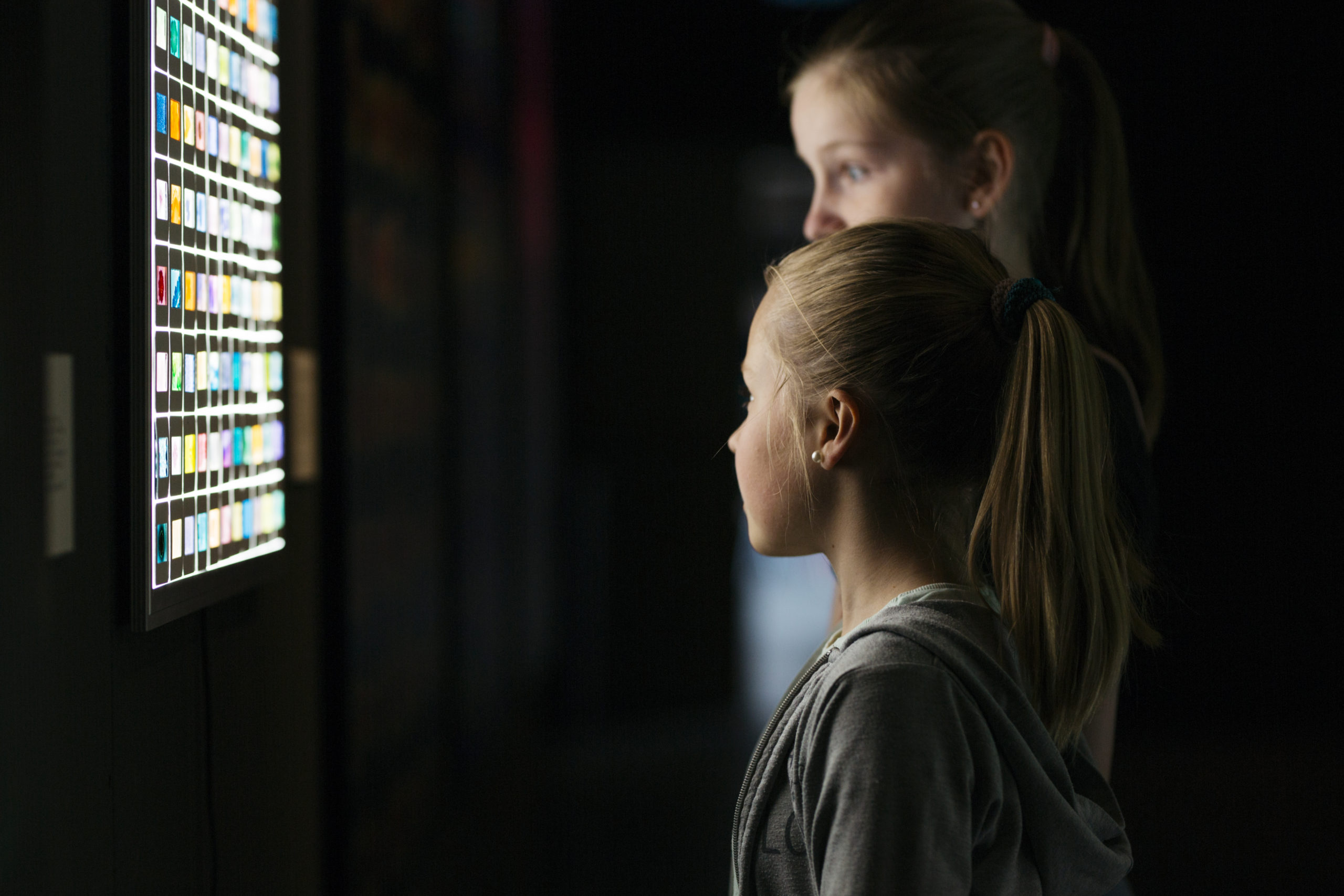
With the exhibition "Look into the invisible" we invite the public to share our fascination with the borderland between science, art and technology.

"Seeing into the invisible" is about being able to see with the tools of scientists. Not only can we glean exciting results from research and innovation, but also provide a taste of why scientists' everyday lives are so exciting and fascinating. Art and science are fundamentally different, but they also have a number of common denominators. Curiosity, creativity, a desire to create, cutting-edge expertise, technological and craft skills are common traits for both scientists and artists. In this exhibition, art, science and technology meet in an inspiring and challenging way.

We also offer tailored learning resources that can be used in the exhibition. Read more about the teacher-led activities for the exhibition here: Learning resources.


Contact person

Egil Paulsen
Content developer
egil@vitenparken.no