Brønnerud School in Ås started a school garden in 2005. It started small, and now the school garden is an integrated part of school life through annual plans, annual cycles and our didactic thinking. The school garden creates great joy, curiosity and engagement among both students and teachers, - and not least parents, the local community and the business community.
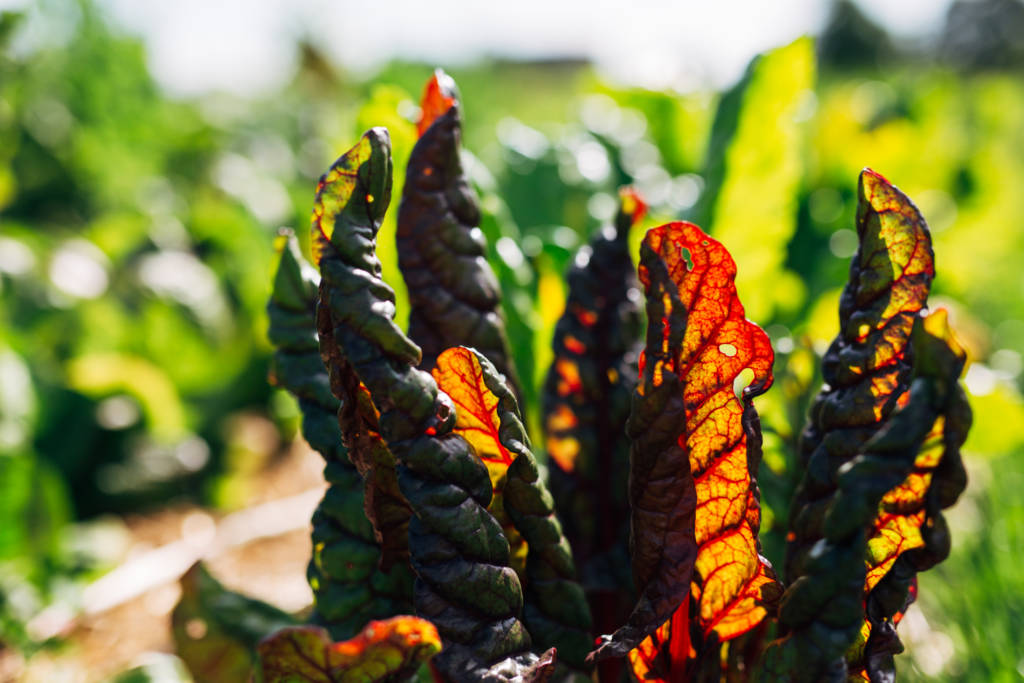
Our school garden
We are so lucky that the school is located on what was previously a farmyard. This is now our school garden. We have nine beds, some about 6 m2 and some 10-11 square meters. Each grade is given its own bed every spring, which they are responsible for until they close it for the fall. The beds are distributed according to what the grades are going to grow and according to the crop rotation plan, but it often happens that the youngest students have the smallest beds, while the oldest have the largest. One of the beds is a herb bed with perennial plants and rhubarb. In addition, we have berry bushes along one of the walls of the school building.
Pre-cultivation in the barn and bomb room
The students do the sowing work in the classrooms. As soon as the plants have sprouted, they are moved out into our “barn,” which is uninsulated. This is actually more of a garage. There we have desks with grow lights above and plastic around to keep in the heat. The grow lights are controlled by a timer, so that they are on 12 hours a day. We have the grow lights on at night because they give off a little heat and thus protect against frost. We also have some grow lights in the bomb room under the gym.
Irrigation
We have always practiced ground cover, which means that there is less watering and weeding. As long as the school is in operation, the different grades are responsible for watering their beds. During the summer holidays, parents water the school garden with sprinklers. It has worked well for us because the hoses and sprinklers have been outside the whole time, so all we have to do is turn on the water.
Fertilizer and compost
We have two hot composters at the school. There we compost food waste from the classrooms, the staff kitchen and the school kitchen. Taking care of the hot composters is part of the teaching for grades 3 and 4. They are also responsible for emptying the composters before the summer and mixing the hot compost into the cold compost after the spring harvest is finished, so that it can mature for next year. We also have a cold composter with garden waste. This is used as fertilizer together with horse manure, which we get from one of the nearby farms.
Equipment
Depending on the size of your garden, the equipment you need will vary. Equipment is also expensive, so start small and prioritize: shovels, grapples, plant spades, iron rakes, watering cans, and wheelbarrows.
We recommend compact tires without an inner tube!! You don't need a full class set of everything, but it's nice that several students can work together on the task. What we use most are wheelbarrows, shovels and grabs. The wheelbarrows and watering cans are very popular.
The autumn market – an experience of solidarity
Teaching sustainability consists of the dimensions of ecology, economy and social conditions. In order to highlight the economic and social aspects, the work in our school garden is aimed at the autumn market that we hold in week 38 every autumn. The autumn market is the end of the gardening season. Then we have time to harvest and make products after the summer holidays. Parents and family, as well as the local community, are invited to the market. The students have prepared food and other products from the garden and the surrounding nature. They also make sustainable handicraft products based on recycling. In addition, coffee, juice and snacks and cake are sold. The students open the market with a song.
We send the profits from the market sales to Mavis Home – an orphanage in Zimbabwe run by a private foundation in Ås. At each market we receive a greeting from Mavis about the progress of the project and how the children at the orphanage are doing. Contact with Mavis Home is an important part of the work in the school garden.
Advantages of a fall market:
- Provides a clear goal for work in the garden
- A happening that has a unifying effect on students, parents and the local community
- Provides room for a lot of interdisciplinary work in the preparations and implementation
- Students receive real-world training in buying and selling, exchanging money, and providing service.
- Reduces the need for crop storage
Challenges with a fall market:
- It requires a lot of organization and work in an otherwise busy start to the school year.
- Limits what we can grow as the crop must be adapted to the time of harvest/processing
Kindergarten didactics
All activities in the school should be rooted in the curriculum, including the work in the school garden. Since school garden is not a separate subject, the goals must be derived from the general part of the curriculum, or from the goals for the various subjects. As the work in the school garden is expanded, it opens up many opportunities to think interdisciplinary, and thus derive goals from many subjects. That said, we believe that it is wise to start small, and be a little generous with yourself. In the first instance, it is most important to gain some experience, and then the requirements can come gradually.
The first thing to think about is to let the students participate actively. Pre-work and post-work in the classroom significantly increase the learning outcome from gardening. For example: look at seed bags and talk about how and what to sow inside, do the practical work outside, and then let the students write in the "nature diary" afterwards. This allows them to both reflect on what they have done and learned, and practice using professional concepts.
The new curriculum places great emphasis on exploratory teaching. You can either do experiments inside the classroom, where you take what you learn out into the garden, or you can do experiments outside in the garden, which you take into the classroom for further processing. Several of the teaching plans on this page are designed to make this connection.
Rating
There is a lot of fun to do in a school garden, but it is not always easy to assess the students' learning. We have gradually become more concerned that the activities must be designed so that it is possible for the teacher to assess whether the students have actually learned what was the goal of the activity. To achieve this, we have made good use of "backward planning", a method introduced by Henning Fjørtoft. In the junior high school, we have had good experience with "nature diary" where the students write and draw from the day's activity. In the middle school, it is easier to use written and digital presentations. Subject discussions, where you talk about the learning activity, preferably in small groups, often as part of station work, are a good form of assessment in both the junior high and middle school. This makes it easier for the students to talk, explain and use subject concepts.
P4C – Philosophy for Children
Ås municipality has long worked with P4C to stimulate students' ability to ask questions, argue, reflect and philosophize about open questions. This is an important part of teaching sustainability and the deep learning we will promote. See https://www.sapere.org.uk/ and https://www.challenginglearning.com/ for more information.
School garden as a learning arena for in-depth learning, critical thinking and sustainability.
Online resources developed by Brønnerud School in Ås and Vitenparken Campus Ås.
