Create a closed loop in a jam jar. When you screw on the lid, you'll never have to water your plant again. The perfect gift for someone who doesn't have such a green thumb, or perhaps a hit at the fall market?
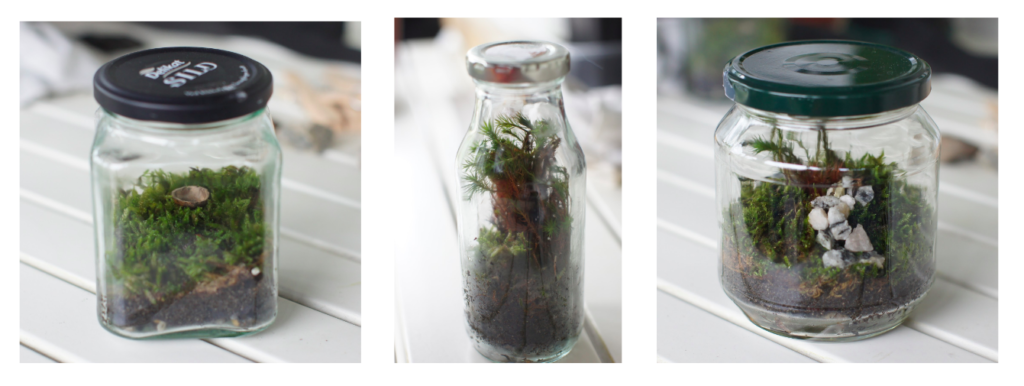
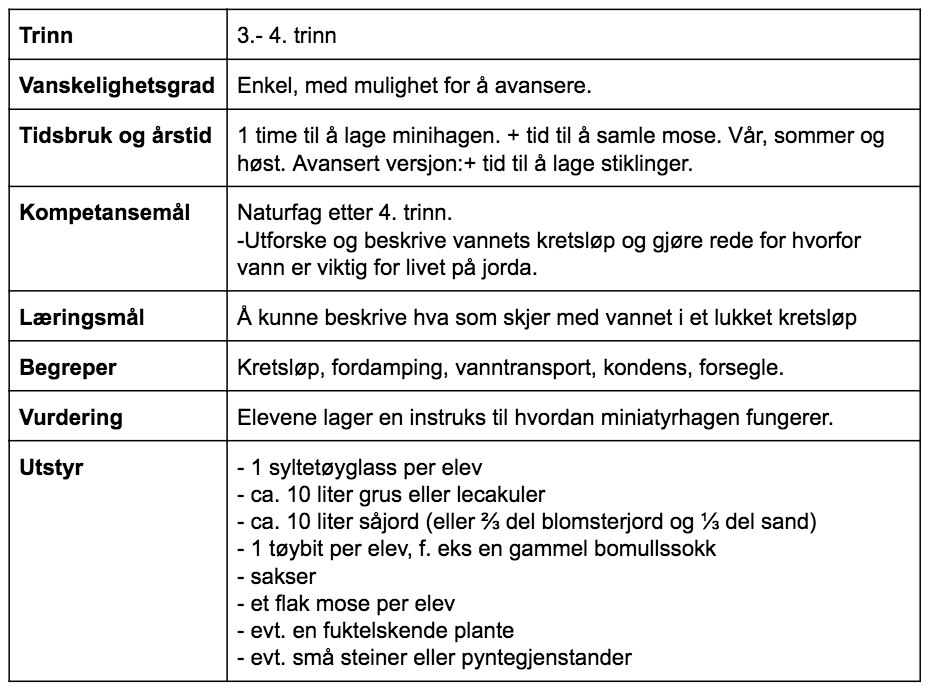
Description of the activity
The students each make their own jar with gravel, a piece of cloth, soil, moss and possibly a small plant and some decorations. If you want to expand the project, you can produce your own small plants by taking cuttings from potted plants the students have at home, or buy a plant from which you take many cuttings.
When the students have made the miniature gardens, they create a small instruction manual that goes with the jar. It is also nice to make a jar that can be placed in the classroom. What is happening in the jar? Watch and see if you can see where the water is. Does it move? The water evaporates from the moss, plant and soil, condenses on the walls of the jar and flows back into the soil. You have created many small closed circuits.
You need a moisture-loving plant. A small fern or moss are good candidates. You can find the moss yourself. Choose a moss that does not grow on trees. Moss on walls and stones is quite easy to remove in fine flakes. The gravel is at the bottom and ensures that the plant roots and soil do not stand in water. The piece of cloth is between the gravel and the soil and keeps them separate. The soil should not be soaking wet and not dry. Water the soil so that it is as wet as a well-wrung cotton cloth. If you water too much, it may be necessary to adjust the amount of water in the pot. Leave it without a lid until the soil under the moss looks fairly dry. Moss thrives best with just a little daylight. The glass should be in a window facing north or a little into the room if the windows have full sun and are facing south, east or west. If the moss starts to mold, you can give it a little more direct sunlight or open it to remove the moldy spot with moss.
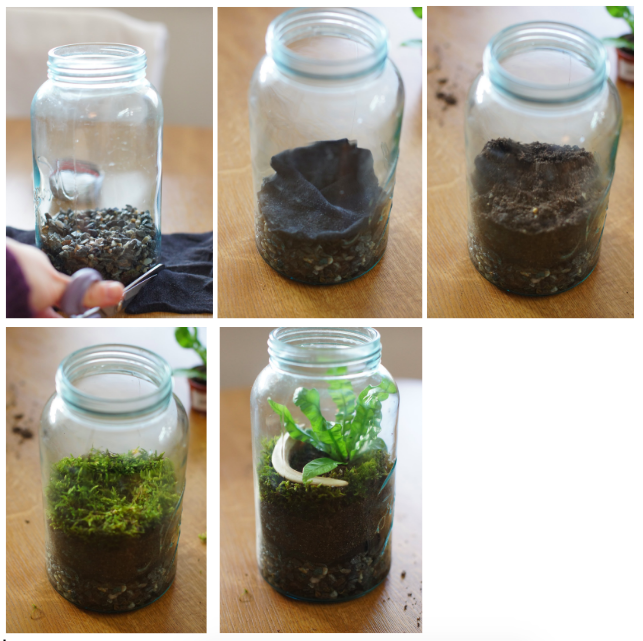
This miniature garden is in a large glass jar and was decorated with moss, a bird's nest fern, and a boar's tooth.
Suggestions for plants that might work:
These thrive in fairly high humidity, don't need much light and are easy to propagate yourself or divide so you get many plants from one plant:
- Wandering Jew, Tradescantia: Cut off a few branches and place in water to make cuttings.
- Green gutters, Chlorophytia : The plant itself produces lots of offshoots that can be planted in the soil.
- Asparagus plumosus. Sometimes sold as a miniature version. Often consists of many small plants and can be divided. Cut the root ball with plants into smaller parts.
- Spots in the air, Muehlenbeckia complexa – a plant often consists of many small plants and can be divided. Suitable for taking cuttings. Cut off a branch and put in water until you see roots.
If you want to try a Norwegian wild plant, sisselroot or other relatively small ferns may be an alternative.

Man with a sealed garden that hasn't been opened or watered in 40 years.
Background information, funfacts and links
To see what others have made, good search terms on the Internet are: “sealed bottled garden”, “closed terrarium” or “moss terrarium”.